

Few everyday rituals reveal as much about a society as the way its people wait in line. The queue is far more than a practical solution to limited service; it is a mirror reflecting values like fairness, patience, individualism, and respect for order.
Across the globe, waiting takes on strikingly different forms, each shaped by history, geography, and social expectation. Observing how a nation queues offers a surprising window into its collective psychology.
From the disciplined lines of Britain to the almost balletic precision of Japan, the humble queue carries cultural weight worth examining.
Why the Queue Deserves Serious Attention?
Standing in line seems mundane, yet it functions as a subtle social contract. When people agree to wait their turn, they express trust in a shared system and in one another.
Sociologists have long treated queuing behaviour as a form of “civil inattention,” where strangers cooperate without direct interaction.
The way a society enforces or ignores queue etiquette tells us who holds authority, how conflict is managed, and what fairness means locally. This makes the queue a genuine cultural artefact, as revealing as language or cuisine.
The British Queue: Order as National Identity
In the United Kingdom, queuing borders on a sacred institution. The British are often described as the world’s most enthusiastic and orderly queuers, treating a well-formed line as a symbol of decency and self-restraint.
Jumping the queue is considered a serious social offence, capable of provoking quiet outrage and muttered disapproval far more than open confrontation.
This reverence has roots in wartime rationing, where orderly waiting became a matter of survival and shared sacrifice.
The British queue rewards patience and penalises pushiness, reinforcing a broader cultural preference for understatement.
Even in digital spaces, the instinct carries over: at live-dealer tables on platforms like Runa Casino UK, players who arrive when a table is full wait their turn for a seat exactly as they would at a bank counter, and jumping that queue would feel just as impolite. The line, physical or virtual, remains a stage for demonstrating good manners.
The Japanese Queue: Precision and Collective Harmony
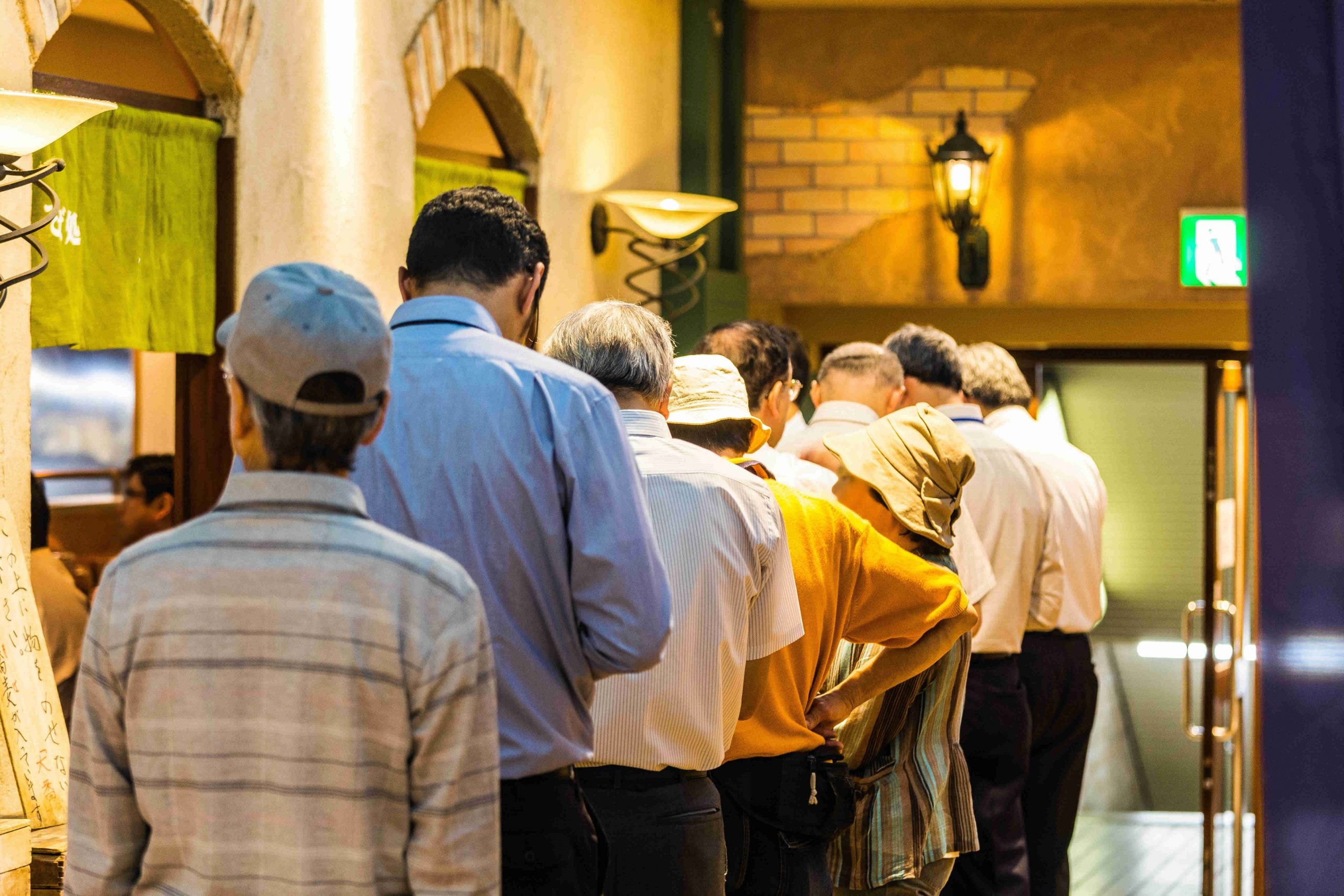
Japanese queuing elevates order into something approaching art. Lines form with remarkable neatness, often marked by painted footprints, floor arrows, or staff quietly guiding the flow.
This behaviour reflects the cultural value of wa, or social harmony, where individual desires yield to the smooth functioning of the group.
Waiting is rarely accompanied by frustration; instead, it is accepted as a natural and dignified part of daily life.
What distinguishes the Japanese queue is its silent efficiency and the absence of visible impatience. Below are qualities that define this approach to waiting.
- Spatial discipline: People maintain consistent, respectful gaps.
- Anticipatory design: Public spaces are engineered to make queuing intuitive.
- Emotional restraint: Complaints and displays of irritation are uncommon.
- Reciprocal trust: Order is maintained without heavy enforcement.
These traits transform waiting into a quiet act of civic participation rather than a burden.
The American Queue: Efficiency Meets Individualism
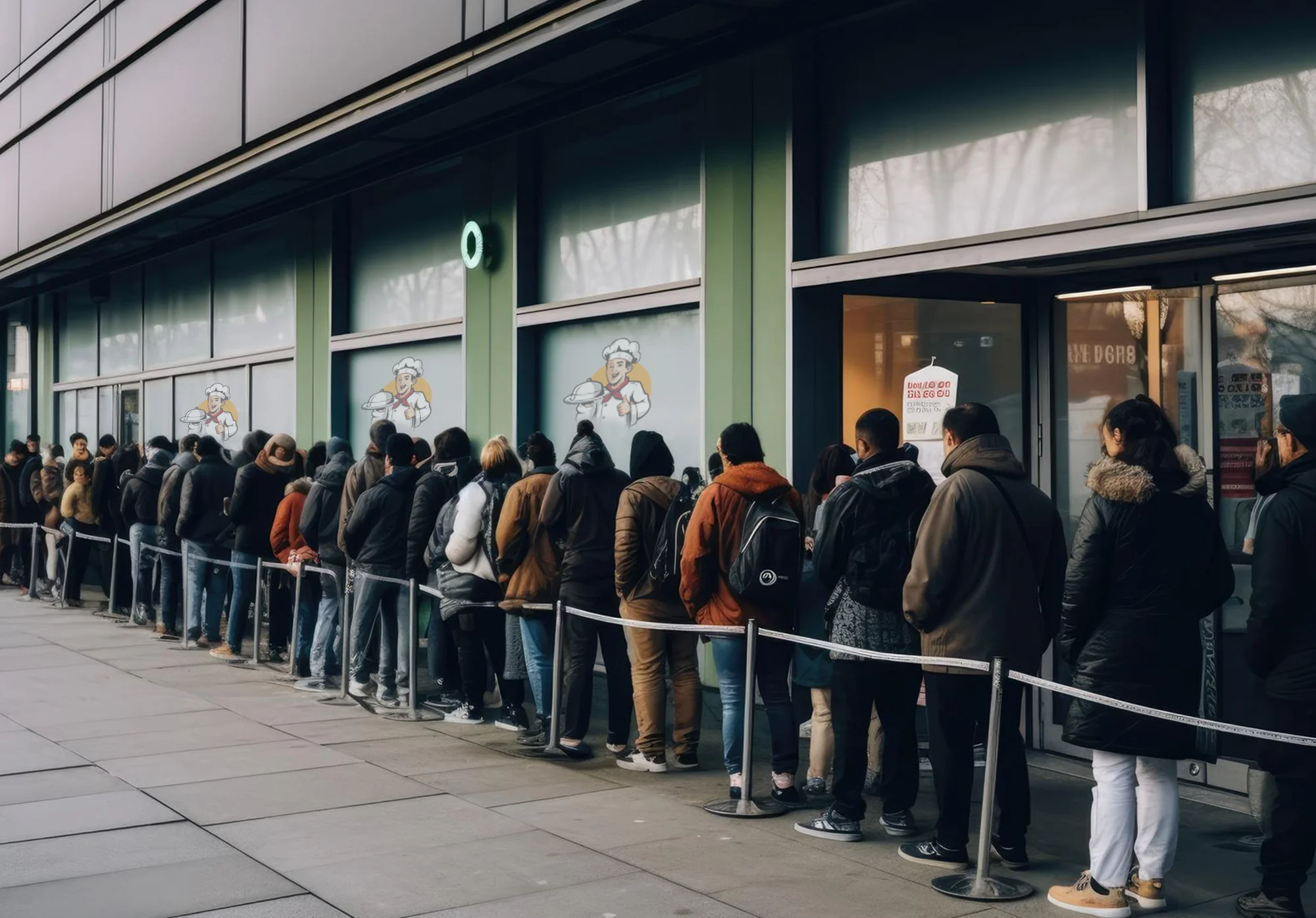
American queuing reflects a tension between two national instincts: a love of efficiency and a deep belief in individual rights. Lines in the United States are often pragmatic, valued mainly for getting people served quickly rather than for their aesthetic order.
Americans are generally comfortable questioning a queue’s logic, asking whether an express lane, a ticket number, or a faster method might serve better. This problem-solving attitude reveals a culture that prizes optimisation over ritual.
At the same time, fairness remains crucial, and cutting the line can spark direct, vocal objection. The following table contrasts key queuing attitudes across the four cultures examined here.
| Culture | Core Value | Attitude to Line-Jumping | Emotional Tone |
| British | Fairness and restraint | Deep silent disapproval | Reserved |
| Japanese | Harmony and order | Rare, socially unthinkable | Calm |
| American | Efficiency and rights | Openly challenged | Assertive |
| Italian | Flexibility and relationship | Negotiable, situational | Expressive |
This comparison highlights how a single behaviour can carry radically different meanings.
The Italian Queue: Fluidity Over Formality
Italian queuing operates by a different logic altogether, one that outsiders sometimes misread as chaos. In many Italian settings, the line is less a rigid structure and more a loose cluster where social awareness determines order.
People often track who arrived before them mentally, relying on informal acknowledgement rather than a physical row. This reflects a culture that values relationships, spontaneity, and personal negotiation over strict procedure.
Rather than signalling disorder, the Italian approach demonstrates a flexible social intelligence. Knowing your place without a visible line requires attentiveness and confidence, blending assertiveness with an understanding of local rhythm.
What the Line Teaches Us About Ourselves?
The way people wait exposes the invisible architecture of their culture, from Britain’s polite discipline to Italy’s fluid negotiation. Each style balances fairness, patience, and identity in its own way, proving that no single method is universally “correct.”
Paying attention to these differences can make travel richer and cross-cultural encounters far smoother. Next time you find yourself in a line, consider what it quietly says about the society around you, and remember that the patience you practise reflects the values you carry wherever you happen to travel.
