

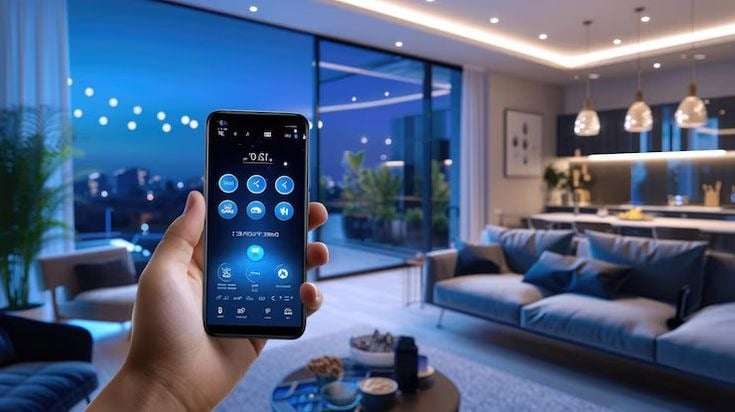
Creating a sophisticated and modern home is not just about luxurious features, bespoke joinery, or interior finishes but also the ease with which everyday tasks can be carried out.
While property owners increasingly look for ways to better withstand physical degradation in their security gate systems and eliminate the need to replace tortoise-like plastic SIM cards and cumbersome wired structured landlines with more agile solutions for household monitoring and high-speed data transmission, a system using software-based telecommunication solutions such as eSIM Plus can offer it without the need for a landline connection or cumbersome wires.
Quiet efficiency is becoming an increasingly valued part of modern, domestic design. A home that runs easily, with low energy costs, and is comfortable to live in becomes possible when automation technology serves the home lighting, underfloor heating, and perimeter security systems.
Getting there, however, necessitates a rethinking of the network of communication that moves messages around a smart home.
The Vulnerabilities of Wi-Fi-Only Home Automation
The majority of setups for home automation simply use a fixed broadband network connection that is present in applications meant for home use.
Using a traditional fibre connection can effectively serve HD media streaming and remote working every day, but placing a single domestic router in charge of critical home systems creates numerous vulnerabilities.
Any disruption in local power, periodic software updates, or problems with the underground cable in the street room can abruptly cut off a homeowner’s connection to their property.
Automated security cameras, water and thermostat leaks, and other smart devices cannot communicate with the automated security system as the central Wi-Fi network fails.
Moreover, when your family is overrun with activity, contention for bandwidth can result in delays. Playing video files, downloading large work files, or video conferencing simultaneously from multiple family members slows down local network traffic and consequently the transmission of small time-critical sensor signals.
Turning over critical monitoring components to cellular data pathways produces a separate, resilient data pathway with online capability past the local broadband.
Dedicated Virtual Lines for Smart Property Logistics
In addition to data being transmitted from hardware sensors, today’s homes run a constant stream of administrative and operational messaging.
The use of personal cellphone numbers for home repairs, deliveries, and perimeter access will soon turn them into an inbox overload.
When you add a separate virtual phone line to your property management system, home logistical problems become clear:
- Automated perimeter access. A modern electric gate, a rising bollard or courtyard gate, can be programmed to respond to the calls received on a specific telephone line so that owners can grant access to couriers for drop-offs, or to their gardeners and workers.
- Slimmed down trade co-ordination. Heating engineers, window cleaners, arborists and domestic personnel are able to call an individual house rather than individual family members on their private phones.
- Centralised household alerts. They are received from smart utility meters, environmental monitors, and sump pump sensors will be sent directly to a dedicated property line, where technical maintenance alerts can be easily distinguished from normal, personal messaging activities.
The management of a rural retreat, coastal cottage, or secondary townhouse is very logistically demanding.
When buildings are located away from normal operations for extended periods, adequate environmental monitoring is required to avoid expensive damage to the structure:
- Freeze protection. During the winter, an outside night-to-day temperature sensor and some pipe thermometers, linked to a cellular network, measure the ambient temperature inside the pipe and the pipe temperature, and provide instant warning when a heating circuit goes out.
- Independent cellular links can be used to report generation statistics and battery storage levels for energy management systems, including ground-source heat pumps, solar panel inverters and battery storage systems, enabling systems to run at their optimum throughout the year.
- Localised regional presence. It is a virtual line that will be assigned to an out-of-town property, and service providers can call the property using the local area code, which doesn’t incur the ongoing charges or installation costs of standard copper-based landlines.
Secondary properties are still fully monitored, since cellular connectivity does not function through land cable connections, even when the season calls for maintenance of utility cables, in the face of extreme weather, or in rural areas.
Seamless Integration: Hardware-Free Domestic Connectivity
A large, external antenna receiver or tower of region-specific plastic SIM cards is no longer always necessary for a home installation using cellular communication as part of its home automation system. With modern software-defined telephony, the installation process is streamlined.
Homeowners can keep their day-to-day personal telephone line and a home-ownership line all in one smartphone with the help of an appropriate dual-profile smartphone.
It will push property communications, gate intercom, and messages to contractors directly to another channel, without needing a second physical phone or desk-based receiver.
Everything is done in the digital realm – a total lack of plastic card frames to toss; there is no need to arrange an appointment with a person to be on-site in order to run special cabling through delicate plasterwork for phones, etc.
The whole telecommunications structure is implemented in software, without any violation of the minimalism and the architectural integrity of the living space.
The Future of Connected Home Design
Peace of mind is the ultimate sign of luxury in any home design. A smart home must also be quiet and reliable, ensuring it helps maintain comfort and efficiency and avoids any unwarranted domestic friction.
When integrated with resilient, software-controlled cellular communications, property owners are now connecting to an integrated, strong cellular-based domestic management system.
Modern homes control and fine-tune property communications with the autonomy they also need during battery and modem power-downs, and manage vacation flats from afar.
