

Most solar payment plans start with one question. Can you pay this amount every month?
Sunrisal starts with a different one: how much do you actually earn?
The Nigerian renewable energy startup has won a $25,000 grant from the Economic Community of West African States (ECOWAS), news that became public on November 14, 2026. The money came through the third call of the Regional Off-Grid Electricity Access Project, or ROGEAP. Sunrisal will use it to bring solar power to rural households and small businesses, starting in Sokoto State in northwest Nigeria.
The founders and the repayment problem
Collins Nnadozie, the co-founder and chief executive, started Sunrisal with co-founder Tamuno Opubo Dappa.
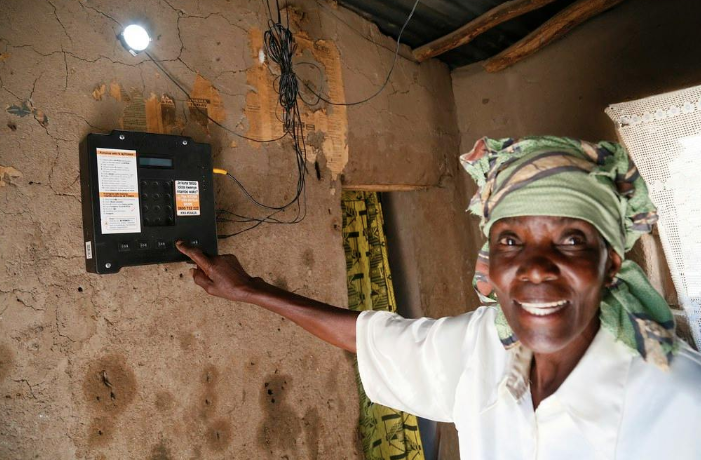
The company sells solar home systems on a pay-as-you-go basis. In plain terms, a customer takes the kit home first and pays it off in small installments, instead of finding the full price up front.
Lots of solar companies in Nigeria sell this way. Sunrisal’s difference is in the schedule.
A fixed monthly payment suits someone on a salary. It is much harder on a rural trader whose takings change from one week to the next, and that is exactly the customer Sunrisal wants. So the company built an AI system that estimates what each customer earns and sets the repayment plan to match. According to MSME Africa, the system works from weekly earnings. The plan is built around what the customer can realistically pay, instead of a figure picked in advance. Sunrisal says this spares people with irregular incomes the strain that fixed payments put on them.
That one design choice is the whole pitch.
A small cheque from a 19-country program
$25,000 is not a big number. ROGEAP grants in earlier rounds ranged from $10,000 to $250,000, so Sunrisal sits near the bottom of the scale.
The program behind it is large, though. It is co-funded by the World Bank, the Clean Technology Fund and the Dutch government’s Directorate-General for International Cooperation, and ECOWAS describes it as covering 19 countries across West and Central Africa.
Sunrisal has plenty of company. The project’s own tally counts 44 small and medium-sized businesses awarded in the third call, after 31 in the first and 91 in the second.
Nnadozie’s case for Sokoto
Sunrisal points to an estimated 85 million Nigerians without reliable electricity. Its targets are rural traders, households and small businesses.
Nnadozie tied the grant to economic opportunity as much as to power. Reliable electricity, he argued, lets a small business stay open later, keep goods from spoiling, charge devices and earn more.
It is a very different kind of AI story from the $500 million Torus raised to start selling AI computing. Here the model sits quietly behind a solar kit and decides what a trader in Sokoto pays.
Wait, the payment plan checks your earnings first?
Honestly, that is the part worth paying attention to.
Sunrisal is a solar company on the surface. Underneath, every payment plan it sets is a lending decision, made for customers whose income never arrives in neat monthly amounts. If the AI reads incomes well, customers keep paying and keep their lights on. If it reads them badly, the company carries the gap.
A $25,000 grant won’t settle that question. It does give two founders a chance to test their answer in the field, the way early rounds like Desible.ai’s ₹32 crore seed plus round often do for young AI companies.
What comes next in Sokoto
The rollout begins in Sokoto State. Sunrisal has not announced a timeline for other states, the number of systems it plans to install or the terms of its repayment plans.
For now, Sokoto is where the idea gets its first real test.
