

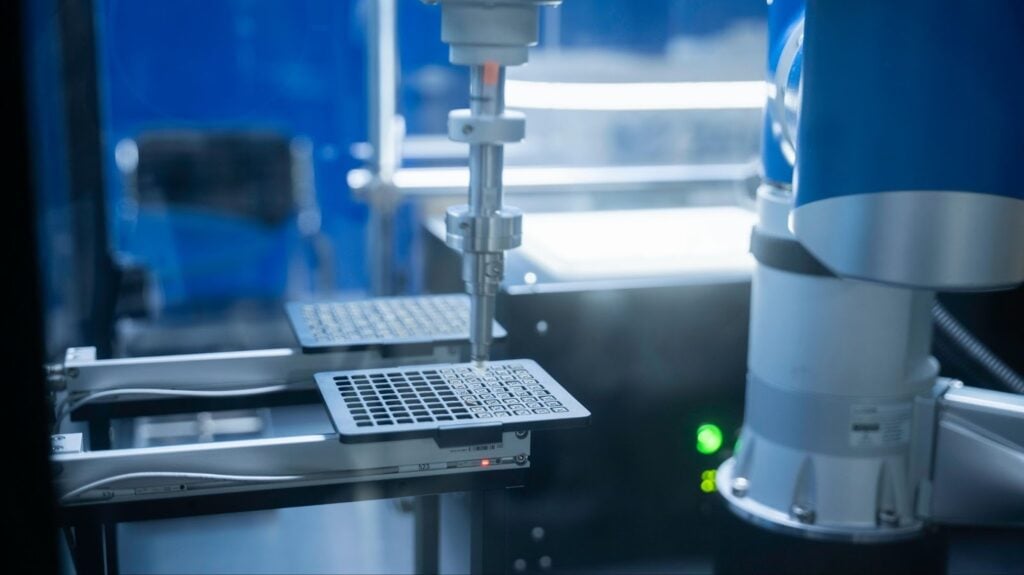
Science research is being transformed by laboratory automation. More experiments, data, and rules are involved in laboratories; thus, the automation tools are essential to ensure work becomes rapid, more precise, and repeatable.
Companies producing lab technology in this evolving industry have played a vital role in driving automation.
Among those companies, IKA laboratory equipment is reputed to manufacture mixers, temperature controllers, and other devices that assist the labs in running automated or partially automated operations in the world.

A Legacy Built on Precision: The History of IKA
Initially, IKA was founded in 1910 and is credited with the development of competent mechanical stirrers. Those stirrers played an important role in stirring chemicals and stabilizing reactions.
Early lab tools focused on:
- Reliable mechanical mixing
- Increased consistency of reaction.
- Durable lab construction
After the 1950s and 60s, electrical parts were added onto equipment to allow the user to have a more in-depth control of the speed, temperature, and timing.
During the 1980s and 90s, computers became available, and as such, the lab tools were no longer completely mechanical, but digitally manipulated devices that could save a set point and record data.
Innovation as a Core Identity: IKA’s Technology Milestones
New technology has transformed the manner in which automated labs perform their operations over the past few years.
Key developments in IKA laboratory equipment are:
- Replacement of mechanical control systems with electronic control systems.
- The inclusion of digital displays as well as programmable settings.
- Coaching on lab information management systems (LIMS).
- Enhancing the safety through automatic shutdowns.
- Providing live track and information recording.
Digital controls allow scientists to precisely adjust such aspects as the speed of the stirring mechanism, temperature, and duration.
Applications Across the Scientific Spectrum
Laboratory automation technology standardizes the lab work, and the scientists will be able to pay more attention to data analysis, reflexive reactions, and developing new ideas, rather than using their hands to repeat some manual work over and over again.
Drug Discovery and Development
In drug research, automation is particularly helpful, especially in the initial phases of the research, when a number of experiments are conducted in the lab.
Drug development automated systems assist in:
- Filter numerous chemicals in a short time.
- Maintain chemical processes at constant temperature.
- Identify the best versions of drugs faster.
Such capabilities would help companies complete the development of drugs within shorter periods and obtain more credible results.
Cell and Molecular Biology
Automation would keep the environment of the sensitive experiments in biological laboratories clean and stable.
Automated tools in use are usually the assistants of:
- Cell‑culture preparation
- Reagent blending can be easily controlled.
- Homogenization of samples
The level of contamination is diminished through standardization of these procedures, and enhances the reproducibility of experiments.
Chemistry and Physics / Analytical Science
Analytical scientists and chemists use controlled experimental conditions. The automation implies the accuracy of reactions and sample preparation.
Popular processes that are automation-assisted are:
- Soft engineering reactions.
- Temperature‑regulated mixing
- Online sample preparation.
- Routine analytic analysis.
The capabilities are also essential in the circumstances of carrying out experiments where extremely repeatable conditions are needed.
Bioprocessing and Scale-Up
Laboratory automation systems are needed to provide the ability to scale experiments when laboratory findings are transferred to industrial manufacturing.
Automation facilitates the process of scale-up because it:
- Scale up of laboratory conditions.
- Controlled environments of mixing and reactions.
- Batches of products of the same quality.
- Pilot production monitoring of data.
These facilities assist in the development of the connection between the lab work and the industrial production.
IKA vs. The Field: How It Compares
There is a large number of automation technologies manufacturers that fill the laboratory equipment market.
51% of companies are now using AI and automation for data analysis. When labs are compared, they tend to evaluate a number of important parameters.
Some of the key areas of assessment are:
- Accuracy of precision and control.
- Permanence and extended stability.
- Online integration and other connectivity.
- Scalability of equipment
- It is easy to use and easy to interface.
- Availability of maintenance and services.
Analytical instrumentation (i.e., chromatography, spectroscopy) and some other companies provide equipment to laboratories in the form of laboratory process equipment (ironing, heating, and reaction control).
What IKA’s Automation Push Means for Science?
The whole movement towards laboratory automation systems is of great importance to the scientific community.
Automation also enhances laboratory efficiency in a variety of ways:
- Continuals in the form of running experiments.
- Carrying out a high number of experiments at the same time.
- Decreasing physical processing of samples.
- Normalizing the experimental conditions within research groups.
Smaller automated machines today enable numerous of these same functions to be attained in universities and start-up laboratories.
Conclusion
Science is transforming with laboratory automation, and now in many fields, it increases the accuracy, efficiency, and reproducibility. To summarise, there are three main lessons to note how such developments can be important:
- Lab equipment has been developed over the past hundred years under the guidance of precision engineering.
- Continuous technological developments, including the use of digital controls and tracking of data, have transformed the way experiments are done.
- Now, most areas of science are touched with automation and accelerate and enhance research in pharmaceuticals, biotech, chemistry, and analytics.
As more and more instruments and equipment are dependent on digital tools and programmable equipment, automation continues to be an aspect of contemporary science infrastructure.