

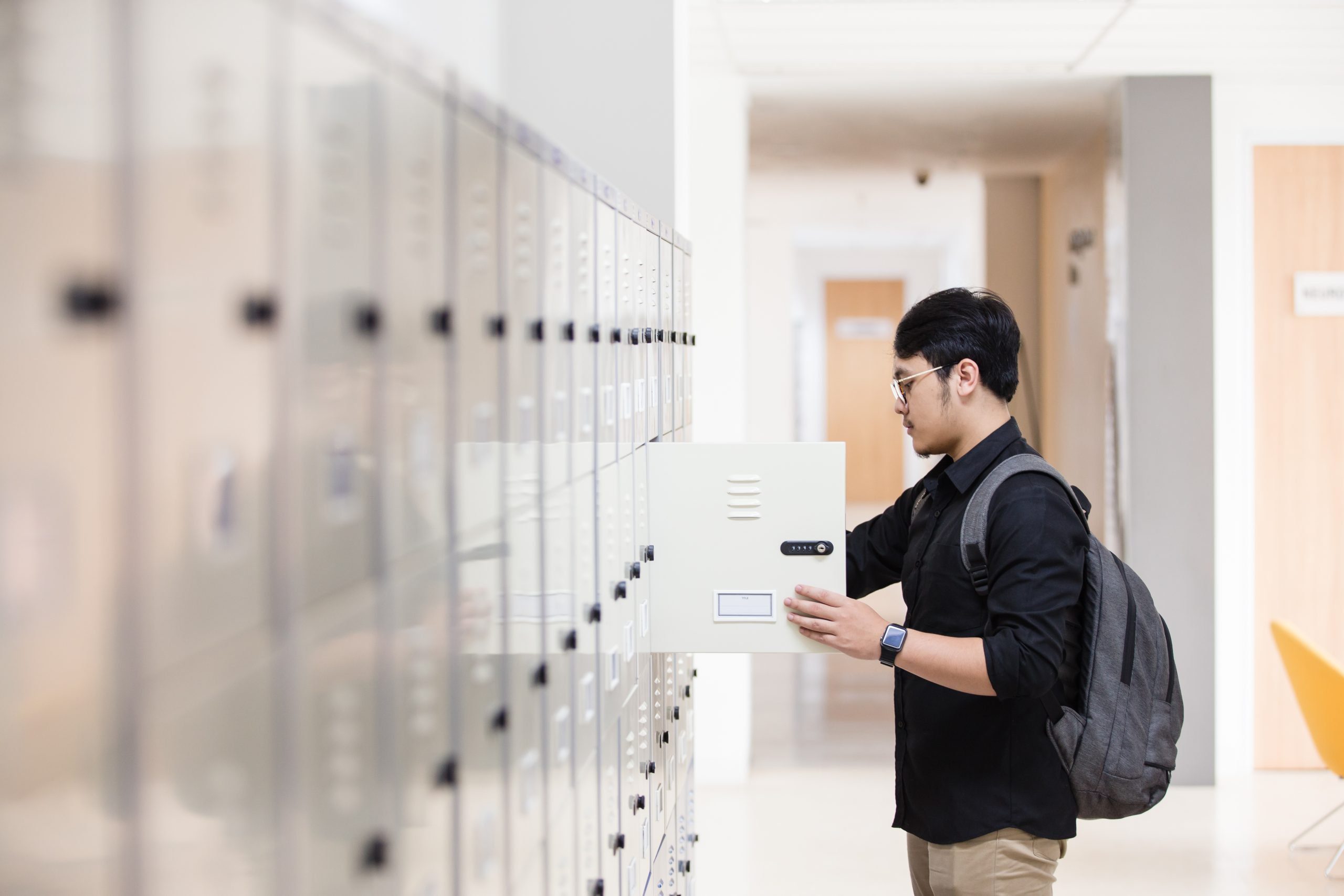
In 2026, more universities are moving past the old “bring your own device” mindset and toward device equity— making sure every student can get their hands on high-performance laptops, tablets, VR headsets, and other specialized gear they need to keep up with modern coursework.
The goal is straightforward: close access gaps and meet the reality of hybrid learning. The day-to-day work, though, is where things get complicated.
Once a university starts providing more devices, it also has to manage the logistics: where the devices are kept, how they’re charged, how students check them out safely, and how people get them when they need them — even after office hours.
On a big campus with lots of buildings and different student schedules, this becomes less about “storage” and more about getting devices to the right people at the right time, while keeping track of everything and avoiding downtime.
That’s why the conversation is shifting from basic student lockers to intelligent asset hubs — systems that tie physical access to campus identity, IT service workflows, and facilities operations.
Leading Campus Solutions for 2026
Universities don’t invest in lockers just to have lockers. The best solutions usually plug into a bigger modernization push — identity and access integration, IT service delivery, unified logistics, or improving the student experience. The platforms below reflect the most common directions campuses are exploring for 2026.
ForwardPass: Centralized Lifecycle and Charging Hubs
For institutions managing large-scale 1:1 laptop pools, VR/AR programs, or “loaner-and-repair” cycles, the locker system often needs to do more than secure devices — it needs to automate service delivery.
ForwardPass charging locker solutions for higher education are positioned as a centralized hub for device lifecycle operations, combining secure exchange with a purpose-built charging layer.
The model is best suited to campuses that want to reduce student downtime and avoid forcing all swaps through staffed IT desks.
Instead of limiting service to business hours, an automated hub supports 24/7 pickup and return workflows, which can materially improve continuity during midterms, evenings, and weekend study patterns.
In practice, the differentiator is less about the cabinet and more about the operational loop: exchange-ready inventory, predictable handoffs, and a repeatable process for keeping shared devices secured, charged, and maintained in a controlled environment.
LocknCharge: Classroom-Level Mobility
LocknCharge is often evaluated when a campus needs devices to be mobile across learning spaces and reliably available for checkout and charging.
Universities with flexible classrooms, active-learning layouts, or rotating departmental equipment often need devices to move between lecture halls throughout the day. In those settings, charging carts make it easy to stage devices close to where teaching happens.
At the same time, LocknCharge smart lockers can also play the role of a more fixed access point — for example, set up in a department office, library, or support area where devices can be stored, charged, and checked out in a consistent place.
For many universities, the best-fit approach is a blended deployment:
- Mobile carts for planned classroom use and high daily movement
- A fixed smart locker hub for overnight charging, secure storage, break/fix swaps, and higher-value kits
LocknCharge is strongest when you need both: flexibility for fast-moving instruction and a dependable way to store, charge, and manage devices day to day.
Gantner: Integrated Campus ID Access
Gantner stands out for universities that want lockers to feel like an extension of existing “One Card” infrastructure rather than a separate system students must learn.
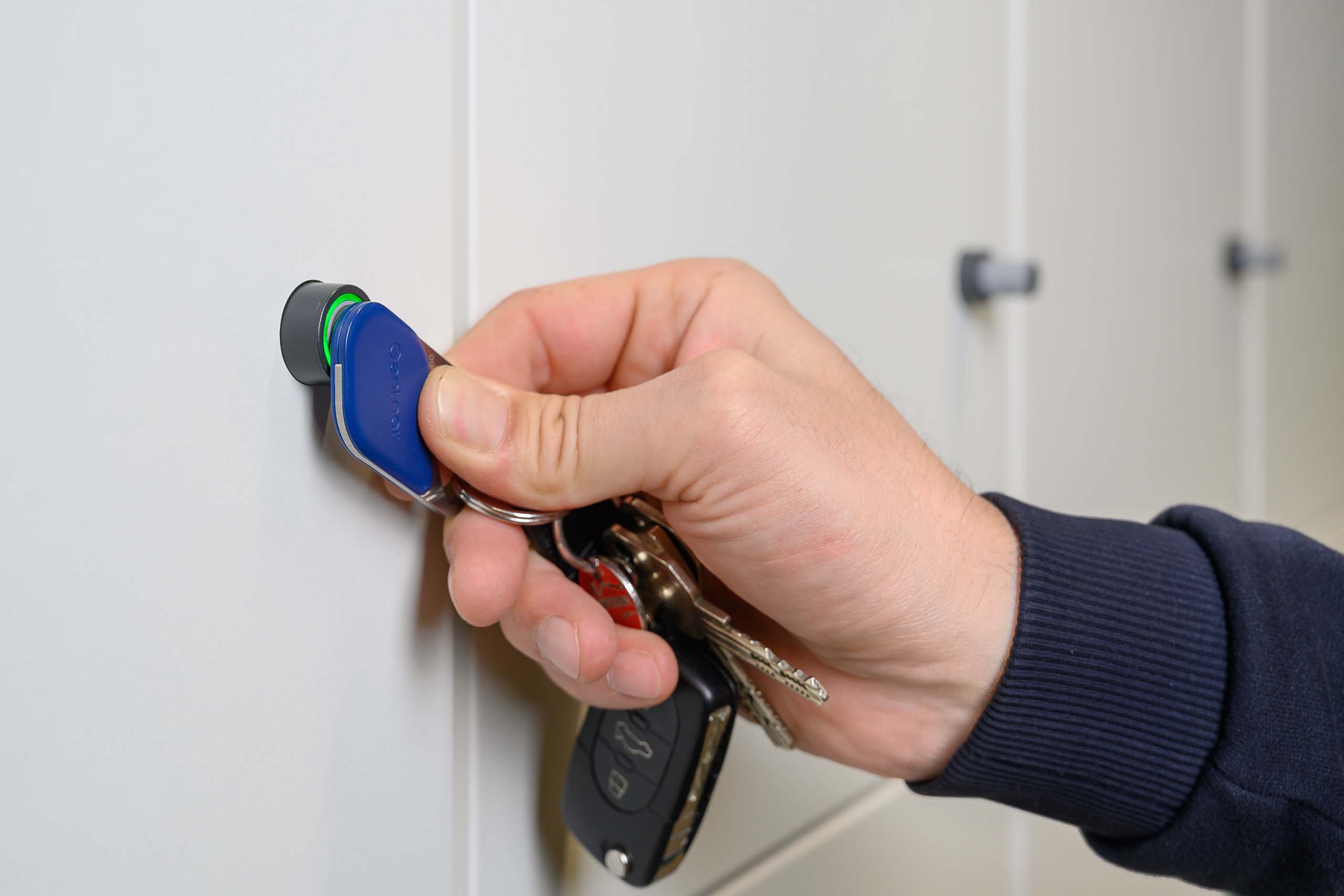
The key differentiator is strong support for RFID/NFC-based access workflows — so students can authenticate with their campus ID card or compatible credentials, reducing friction at the point of use and avoiding parallel badge or PIN management.
From an operational standpoint, this approach fits campuses that prioritize standardized identity policy, predictable access governance, and clean integration into established credential ecosystems.
It’s also attractive when institutions want to retrofit or scale lockers without turning access management into a new help desk burden.
For higher ed leaders, Gantner is typically evaluated as part of broader campus identity modernization: the locker becomes another controlled endpoint — like doors, labs, and secure rooms — only with a self-service student experience.
Luxer One: Hybrid Mail and Asset Management
Luxer One reflects a growing higher-ed trend toward unified logistics: using a single locker platform to manage both student parcel deliveries and internal IT hardware exchanges.
For many campuses, the operational driver is consistency — one access experience, one notification model, and fewer fragmented pickup points across housing, mail services, and academic technology.
That consolidation matters as institutions expand device-access programs and try to standardize support for students who rely on campus-provided hardware.
EDUCAUSE’s Students and Technology Report emphasizes how strongly students value flexibility and consistent support in their technology experience, which helps explain why universities are investing in self-service infrastructure that works across schedules and locations.
Smiota: Inter-Campus Asset Delivery
Smiota is often discussed in the context of distributed pickup/drop-off across multiple buildings — especially when the institution needs secure handoff points without requiring synchronous staff coordination.
While many locker deployments begin with parcels, the same infrastructure can be used as controlled exchange nodes for internal logistics: documents moving between departments, specialty equipment staging, or time-boxed drop-offs for inter-campus workflows.
For higher education, the value proposition is less about “a locker” and more about a network: multiple locations, standardized notifications, and a repeatable chain-of-custody handoff process that reduces dependence on in-person coordination.
This can be particularly relevant on campuses where departments operate semi-independently across buildings and where students and faculty move irregularly throughout the day.
As universities re-think how services are delivered across a changing physical footprint, distributed self-service endpoints become a practical modernization lever.
Ricoh: Managed IT Service Hubs
Ricoh is notable for institutions that want a managed operating model — where lockers are not just installed, but wrapped into a service framework.
In this “locker-as-a-service” concept, the locker can function like a physical extension of the IT service desk: a self-service kiosk for device handoff, tracked distribution, and controlled access, with optional support services that reduce day-to-day operational load on campus teams.
This can be attractive to universities balancing device program growth with staffing constraints. Instead of building every operational process internally, the institution evaluates a bundled approach — hardware, software, and service — aligned to outcomes like reduced ticket volume, more consistent availability, and stronger accountability for shared assets.
The fit is strongest when the campus wants standardized workflows and reporting without turning locker operations into another platform the team must fully own and maintain end-to-end.
Yellowbox: Dynamic App-Based Storage
Yellowbox tends to map to student experience use cases — especially in hybrid libraries, student centers, and commuter-heavy environments where students want secure, temporary storage for expensive electronics.
The distinguishing feature is a booking-driven model: lockers that can be reserved dynamically via mobile workflows, often aligned to time-boxed usage rather than permanent assignment.
For higher ed leaders, this is a different category of value than “device fleet operations.” It supports the lived reality of modern campuses: students move between spaces, carry high-value devices, and prefer frictionless self-service.
A dynamic approach can also help institutions manage demand variability — peak hours, exam weeks, events — without expanding staffed services.
When evaluated alongside other locker systems, Yellowbox often represents the “personal storage” side of campus modernization: a facilities and student-experience lever that improves convenience and perceived safety.
Pitney Bowes: Campus Shipping and Receiving
Pitney Bowes is frequently positioned around the back-of-house logistics layer: shipping, receiving, and chain-of-custody.
For universities managing high volumes of inbound deliveries — or tracking high-value items like research equipment — these lockers can become a controlled endpoint in a broader tracking process.
This matters when multiple departments touch an item before it reaches the final recipient, and when auditability is a real requirement rather than “nice to have.”
In higher education operations, the strongest fit is often centralized receiving teams that want standardized intake, predictable distribution, and reduced manual handling. The locker becomes a documented handoff point: item received, placed, and picked up with an electronic record.
For research-intensive institutions, this can extend beyond parcels into asset accountability workflows — supporting compliance expectations and reducing the risk of loss during multi-step handoffs across campus.
Conclusion: The 2026 Consensus for Higher Ed
The 2026 consensus is that campus infrastructure must be both self-service and data-driven. Smart lockers are increasingly treated as a “physical API” — a standardized endpoint that connects students, staff, and departments to the assets and services they need, with auditable workflows instead of ad hoc handoffs.
For universities, the key decision is not whether lockers are useful — it’s which operational model they support: identity-integrated personal storage, unified parcel and asset logistics, distributed handoff networks, or managed service hubs.
The right platform is the one that reduces friction for students while improving control and visibility for IT and facilities teams.
For universities seeking to automate the physical rotation of their device fleets, ForwardPass charging locker solutions for higher education provide a specialized bridge between student accessibility and administrative control.
FAQs
How do smart lockers support student device equity?
Device equity programs only work when access is reliable beyond standard business hours. Smart lockers can provide 24/7 pickup and return workflows that reduce dependency on staffed counters, helping students who study late, commute, work off-hours, or share responsibilities outside class.
Are smart lockers compatible with existing university SSO?
In most cases, yes. Smart lockers integrate with campus identity systems in two common ways: (1) credential-based access using existing campus ID infrastructure (card or mobile credential), and/or (2) software-level integrations that align authentication and user management with institutional identity providers.
