

Nothing is more frustrating for a college than a situation when you don’t even get a chance to compete with other institutions your prospective students are considering. All because you couldn’t even catch their attention long enough to show your benefits.
Yes, attention is such a valuable currency you can’t help but fight for it – the academic world is not an exception.
To do that, wear the shoes of a typical about-to-send-their-application student for a minute. That person is probably staring at 11+ tabs on their browser, trying to understand which college is worth it. In addition, their parents are concerned about the associated expenses.
And their pressing assignment deadline won’t wait, either, so they might search for phrases like “ DoMyEssay.com can do my assignment for me online ,” turn to essay writing services, and go down the Reddit rabbit hole to vent to their peers instead.
In the middle of everything happening at once, if the school’s message looks vague or too sleek to trust it, the student closes that annoying tab.
Here’s what you can do to prevent such a scenario – avoid these seven mistakes in higher education branding.
Mistake 1: Irrelevant Slogan
If it were you who’d be glancing at many colleges’ websites a day, you’d get an impression all the institutions are identical.
That is what happens on a student’s side of the screen. They literally get tired reading about innovation, countless opportunities, friendly community, and so on and so forth. Despite all those listed benefits being true.
So, your task is to make your brand message easily replicated in a casual conversation. A student should be able to explain your school’s advantage after glancing at your homepage, and a parent shouldn’t have to use AI to simplify academic jargon to understand what it means.
Even your admissions counselor will thank you if you make your school’s brand message so clear that they find talking to students a pleasant experience.
Does your slogan make it possible? When the answer is no, the message is probably doing the bare minimum.
This usually happens when a school tries to squeeze every strength into one line. It wants to sound academic, friendly, ambitious, inclusive, global, affordable, career-focused, and whatever else made it through the committee meeting.
Why not try something easier to remember?
- “For those who want faculty in their corner.”
- “Get career-ready degrees.”
- “A business school for first-generation builders.”
Mistake 2: Pretty Campus, Missing Answers
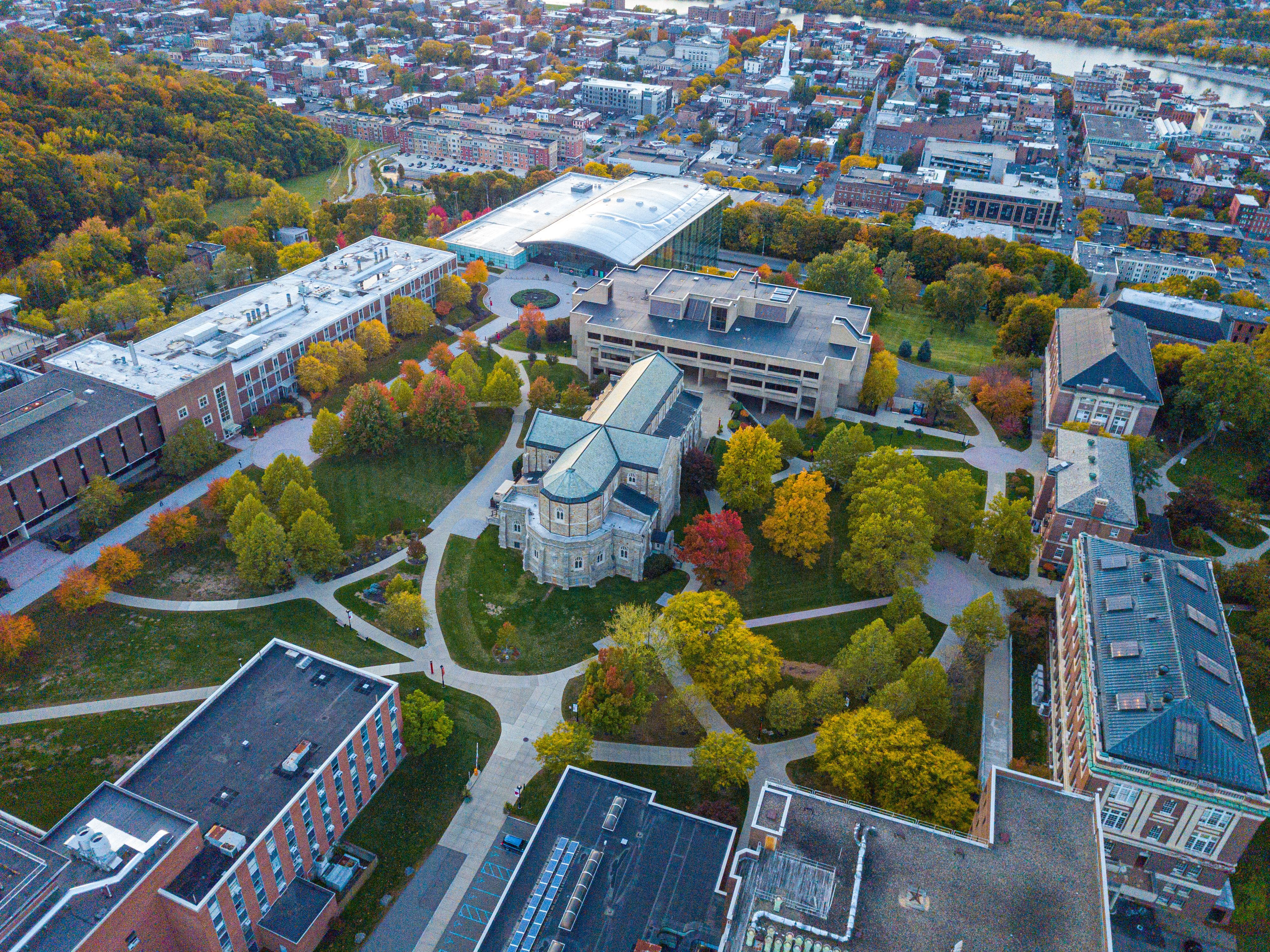
Aren’t you tempted to share the photos and videos of the campus you’re oh-so-proud-of? You absolutely should, but first, check you didn’t trade clarity for a pretty picture.
Besides checking if the campus looks nice, students are trying to imagine themselves a few weeks into their new campus life, when the excitement wears off.
Will a professor answer an email before the assignment is already late? Is there a place between classes they can visit to study productively, or will they struggle to concentrate in the cafeteria? What if they work part-time and can’t access some facilities? Could someone help them when they fall behind?
A university branding strategy should leave room for covering those questions explicitly. Otherwise, the school may not stay on the prospect’s list.
Mistake 3: Degree Pages That Make Students Dig
Some college pages make students work too hard for basic answers. They talk about broad learning paths and connected fields of study, but a student still leaves with the plainest questions unresolved: What will I study? What skills will I actually build? Where could this degree take me? Who helps if I start falling behind?
That means, if you’re branding college life as an exciting and rewarding experience, give your prospects an obvious reason to believe your claim:
- Make it clear who the program is intended for to show you respect people’s time.
- Spell out what students will learn if they choose a certain program or course.
- Explain how to engage in this or that extracurricular.
- Provide career context (but don’t make old-school promises about dream jobs).
An effective page respects its reader’s mental load. Students already balance cost, time, risk, family expectations and future income when making decisions; any additional confusion only harms brand image and perception.
Mistake 4: Lack of Tangible Support
Every school promises that its students will be supported, but that message has become so commonplace that few truly believe it. Students need to see firsthand how support works before accepting it as true.
Support can take many forms: advisor access, writing centers, tutoring hours, mental health services, financial aid assistance, transfer credit guidance, career coaching services, peer mentors and faculty office hours are just a few examples.
Unfortunately, many schools hide these services within separate menus or PDF files rather than listing them directly on service pages.
A strong brand integrates support into its main narrative, not as an afterthought.

Mistake 5: Same Rigid Message for Every Audience
You’ve probably come across college websites with content tailored to one, near-perfect student with no complicated life circumstances that someone on the approving team had in mind.
You never want to end up with such an unrealistic and broad promise; you need to tweak higher ed branding of your institution to a high school senior, their parent, or a busy professional.
If you find it difficult to tailor your key message to the right audience, it’s better to hire an experienced marketer than try to guess your way through.
In a nutshell: stop making everyone walk through the same front door, read the same promise, and do the same mental labor.
Mistake 6: Perfection No One Quite Believes
Trust can drop in an instant when every student quote sounds scrubbed clean. Everyone is “welcoming.” Every professor is “passionate.” Every graduate is “ready for the future.”
The bigger claims can have the same problem. A page promises personal attention, but class sizes sit three clicks away.
A program talks about career preparation, but never shows the kind of work students do before graduation. That gap is where doubt gets comfortable.
A college brand can sound proud without puffing itself up. “Our graduates are equipped to lead in an ever-evolving world” may look fine in a brochure, but it leaves almost no image behind.
A line like “Students build a portfolio, meet employers in required career events, and complete a faculty-reviewed capstone” gives the reader something to picture.
Mistake 7: Using Your Website As Storage Space
College websites often become storage units for every department, deadline, PDF, policy, announcement, and legacy page. The brand gets buried under clutter in this case.
The truth is, students do not care which office owns which page. They care if they can find what they need before they get frustrated.
A messy site sends a message: if applying feels this hard, student life may feel hard, too. That may not be fair, but brand perception rarely waits for a full explanation.
If you are responsible for representing your school online or running the website yourself, use this checklist:
- Are the contents on this page relevant and informative for its audience, including students?
- Are the most relevant pieces of information readily accessible and skimmable?
- Can mobile visitors navigate your page without encountering issues or becoming confused?
- Does the page feel similar to its respective school’s homepage?
- Are the old claims still valid?
Brand consistency transcends colors and logos – it’s about providing students with an experience that guides them through their school’s story without becoming disoriented or lost.
So, How Do You Win Student Attention in 2026?
Students typically leave because too many small doubts have added up; promises sound familiar, but evidence is scarce, support is hard to come by, and the page asks them to trust a school before it has earned that trust.
A strong college brand doesn’t need to shout louder than all the others on screen; rather, it should make the next step feel safer by showing what makes this school great, who it helps most, and offering real support where students may need it most — whether they are comparing programs, looking for academic guidance, or even searching for research paper writing services during a stressful semester — while breaking away from generic campuses that could just as easily exist without lawns and mission statements.
Once a brand feels clear, students don’t need to interpret its value on their own; instead, they can imagine an experience, weigh their options, and determine whether a school belongs on their list before ever submitting an application. That work pays dividends.
