

Before a mechanic starts having any effect, game art can already make the first impression. It could be anything, from a somewhat questionable character model to a flat environment or even the tiniest prop.
Unsurprisingly, modern studios are looking for new ways of building stronger, more experienced game art teams.
Since the in-house approach doesn’t always bring the desired outcomes, developers often look for 3D designers for hire. And the cost here isn’t always the deciding factor. Flexibility, speed, and access are becoming more and more critical.
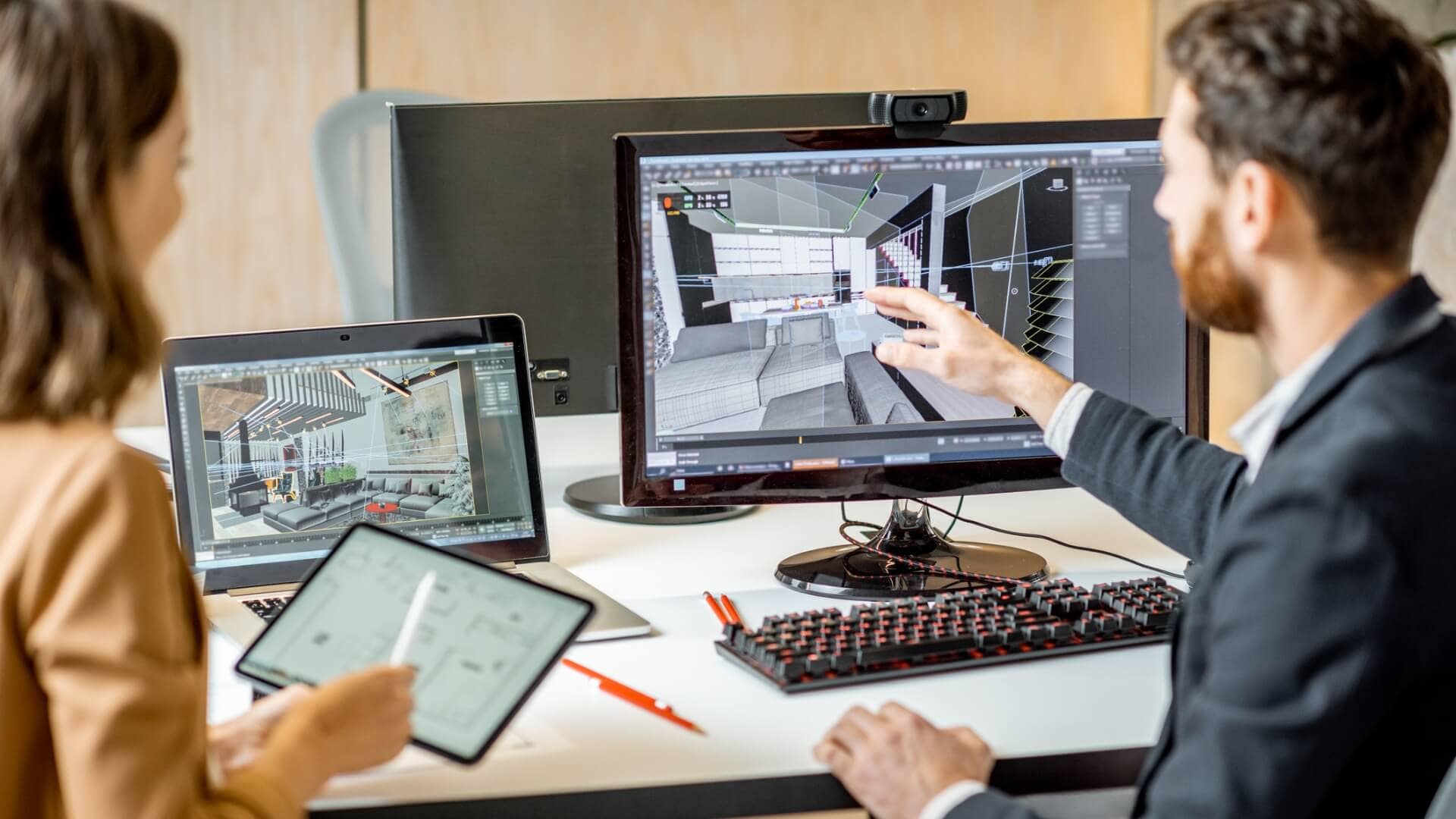
However, hiring 3D artists is usually much more complicated than it may seem at first glance. Why? Even the most impressive portfolio can’t guarantee 100% effective delivery.
Now, the most critical question pops up. How do you make the right choice? Keep reading this article to find out.
Why studios are changing how they hire 3D artists?
Game production has changed a lot. Timelines are now tighter, expectations have grown, and there’s less room for error.
Today, each asset has a specific purpose. More specifically, it has to look proper, work as expected, and fit the engine perfectly. If any of these aspects isn’t covered, it affects all others, having an overwhelming effect on the entire performance.
With that in mind, when you hire 3D artist talent today, you’re not only filling a gap, but also securing your pipeline.
That’s one of the main reasons why outsourcing hiring 3D artists is an integral part of today’s game development.
This way, studios can scale without stumbling into long-term overhead. Moreover, it lets you access professionals who are already familiar with the most widespread production limitations and challenges.
What to look for when hiring 3D designers?
A 3D artist is a wide term, and there’s a huge gap between “good” and “production-ready” here. Focus on the following aspects when evaluating 3D designers for hire.
Portfolio depth over style
Great artists don‘t just strive to make things look good. They always strive to plan ahead. An artist should constantly ask themselves the following questions: Will the designed element work smoothly? Is the geometry clean?
Are the textures efficient enough to avoid bloating performance? If they don’t consider such questions, someone else will help to fix these potential issues in the future.
Technical understanding
A good 3D artist should be aware of limitations. They must calculate how certain elements will behave inside your game.
Anything from polycount to texture sizes and LODs has to be included in their process from the very beginning.
Communication and workflow fit
A lot of hiring decisions collapse at this stage. Why? Because even the greatest 3D artist who misses deadlines or provides poor feedback can become a burden for your project. Prioritize specialists who respond on time and ask proper questions.
Considering that game development itself is a pretty complex process, it’s important to hire people who make it easier, not the other way around.
Specialization
While generalists may be very useful at the initial production stages, specialists are much more relevant for high-quality projects.
Seek those who are particularly skilled in certain areas of 3D design, like character art, environment art, hard structure modeling, and so on. Specialization can make a huge difference here.
In-house vs outsourcing: What actually works?
With an in-house team, you gain more control over the project. But this approach also comes with significant downsides, from high salaries and complex onboarding to meticulous management and long-term commitments. Outsourcing hiring 3D artists, in contrast, ensures flexibility.
With outsourcing, it becomes easier to scale up during difficult production states, benefit from niche expertise (but only when relevant), and decrease operational costs.
Combining these two approaches is also possible. While your internal team sets direction, external outsourcing partners cover production assets. A perfect balance will definitely pay off.
Common mistakes when hiring 3D artists
Even the most experienced team isn’t immune to certain mistakes. The following patterns are the most common:
- Price-based hiring. Having to rework things delivered by a cheaper 3D design partner will likely cost you more than hiring a reliable one immediately.
- Pipeline compatibility issues. Looks don’t always match important tech aspects. Wrong scale, irrelevant topology, or poor textures may cause considerable issues.
- Poor briefs. If you can’t provide the hired team with clear references, style guides, and expectations for the final result, you risk bumping into inconsistencies.
- Insufficient testing. Every important aspect of game design and development needs proper, detailed testing. Without it, a lot of errors might be detected when it’s too late to fix them.
Comparing 3D art studios for high-quality game projects
When seeking an external partner for your game project, you may find that the majority of the available options sound similar.
Most mention high quality and rich experience, but is that always the case? To figure this out, it’s always better to take a closer look.
Below, we will compare several famous 3D art services studios, mentioning their main strengths and weaknesses.
Kevuru Games
Kevuru Games has a team of experienced 3D artists who have had enough time to understand real production in practice.
The agency has been working with various platforms and genres, which proves their teams’ high-level adaptability. The most important thing here is that the studio already knows which things to expect and what they need to pay special attention to.
One of the main advantages of their approach is a good balance between art quality and tech aspects. Other pros include structured workflows, scaling ability, and the availability of specialized teams.
When it comes to downsides, Kevuru Games may not be suitable for those looking for maximum cheap options or the development of quick assets without diving into the project.
RocketBrush Studio
RocketBrush is mostly focused on stylization and mod-core game art. The studio is famous for clean visuals and solid delivery. It’s a good choice for projects with predefined directions, where only implementation support is required.
The key benefits of RocketBrush studio include consistent stylized output and rich experience in mobile and mid-core projects.
The downside is that the team is less flexible when working on projects combining several different art styles. Besides, it might feel somewhat rigid if your requirements often change.
Argentics
Argentics works with various aspects of art and development, offering a more comprehensive approach. This versatility may come in handy for certain types of projects.
The benefits of this studio are an extensive choice of styles, experience in various types of assets, and support for larger production scopes.
In turn, possible drawbacks include the potential lack of specialization in certain smaller aspects of game art. Besides, the quality depends heavily on the expertise of a specific team working on your project.
Why Kevuru Games is a leading game art studio?
The main advantage that sets Kevuru apart is that the studio creates game art as part of a single system instead of working with separate pieces. The team pays attention to every asset, considering how these pieces will be reviewed, handled, and delivered to a client.
Communication is also vital. The studio works in a certain rhythm, making collaboration easier, even when working under a tight timeline.
That level of transparency and consistency is usually the decisive factor for those seeking reliable 3D designers for hire.
Final Thoughts
The right 3D designers for hire are not the ones with the best-looking portfolios. It’s usually the ones that understand your workflow and are ready to adapt to it, bringing the necessary expertise.
This difference is especially clear during production. The appropriate specialists not only create assets, but also make the whole process smoother and more efficient.
We at Kevuru Games have a time-tested approach to workflow structure and consistency. Feel free to get in touch with us, talk to our 3D art specialists, and share your project details.
