

Every company leaves behind more than financial reports and product launches—it creates a history of how it communicates.
From handwritten correspondence and telephone switchboards to cloud-based communication platforms, each technological shift has changed the way businesses connect with customers, suppliers, investors, and partners.
One element has remained remarkably consistent throughout this evolution: the telephone number. Once simply a way to reach a company, it has become a digital identifier that plays a role in customer support, sales, fraud prevention, and business verification.
Today, organizations and individuals often need more than a phone number itself. They want context. Who owns the number?
Is it associated with a legitimate business? Does it appear in publicly available sources? These questions have made phone number lookup an increasingly valuable part of modern business research.
The Historical Role of Business Phone Numbers
Long before websites and email addresses became standard, a company’s phone number was one of its most important public assets.
Printed on business cards, newspaper advertisements, catalogs, and product packaging, telephone numbers connected businesses with customers in a direct and personal way.
Over the decades, business communication evolved through several major stages:
| Era | Primary Communication Method |
| Early 20th century | Telephone operators and switchboards |
| Mid-20th century | Direct business landlines |
| Late 20th century | Toll-free customer service numbers |
| Early internet era | Websites combined with phone support |
| Modern digital economy | Mobile, VoIP, and cloud communication platforms |
Despite these technological advances, the phone number has remained one of the most recognizable business identifiers.
Why Phone Numbers Still Matter?
Today’s organizations communicate through many channels, including email, messaging apps, social media, and video conferencing.
Even so, phone calls continue to play a central role in:
- Customer support
- Sales conversations
- Supplier negotiations
- Recruitment
- Business partnerships
- Financial services
- Emergency communication
Because phone numbers are so widely used, they have also become important reference points for verification and research.
Businesses frequently encounter unfamiliar numbers during day-to-day operations, making it useful to gather additional publicly available context before responding.
Digital Business Requires Better Verification
Corporate history demonstrates that trust has always been essential to successful business relationships.
In the past, trust often came from established reputations, physical offices, or long-term local relationships.
Today, global business happens online.
A startup may negotiate with suppliers on another continent, investors meet founders through video calls, and customers discover brands through digital advertising rather than storefronts.
As a result, organizations increasingly rely on publicly available information to support early-stage verification.
Phone number lookup has become one practical tool within that broader research process.
Modern Uses of Phone Number Lookup
Businesses use publicly available phone-based research in a variety of situations.
Customer Verification
Support teams occasionally need to confirm whether an unfamiliar number is connected to an existing customer or business.
Vendor and Partner Research
Before entering negotiations, organizations often gather publicly available information about prospective partners.
Fraud Prevention
Unexpected calls claiming to represent financial institutions, software vendors, or suppliers can often be assessed more carefully by reviewing publicly available information associated with the calling number.
Historical Business Research
Researchers examining corporate history sometimes use historical contact records, archived directories, and public business listings to trace organizational development over time.
Phone numbers can serve as one of several identifiers that connect different stages of a company’s evolution.
Public Information Creates Valuable Context
A phone number alone rarely tells the complete story.
However, when combined with other publicly available information, it may help identify:
- Company listings
- Public business directories
- Customer support contacts
- Official websites
- Historical references
- Professional profiles
This broader context supports more informed decision-making without replacing traditional due diligence.
Where ClarityCheck Fits?
As online research tools have evolved, specialized platforms have made it easier to organize publicly available information connected to common digital identifiers.
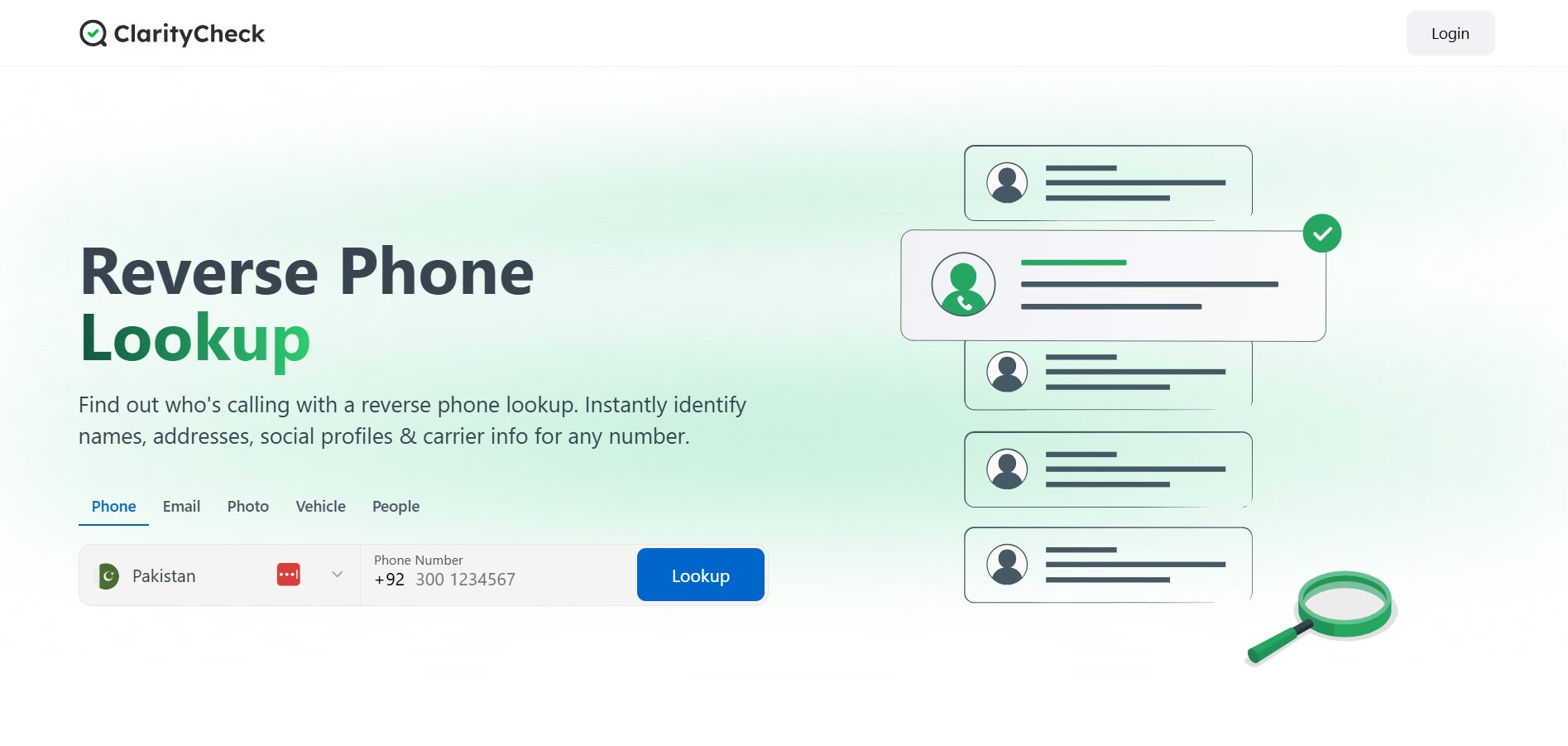
ClarityCheck is one example of a service that supports searches using phone numbers, email addresses, images, addresses, and other publicly searchable data.
For users who need a phone number lookup, ClarityCheck provides a practical starting point for exploring publicly available information associated with an unfamiliar number.
Rather than serving as a definitive source of truth, tools like ClarityCheck are most useful when incorporated into broader business research that also considers official company records, direct communication, and independent verification.
Lessons from Corporate History
Looking back at the evolution of successful companies reveals a consistent pattern: organizations adapt their communication practices as technology changes.
Telephone operators gave way to direct dialing.
Printed directories evolved into searchable online databases.
Traditional customer service expanded into omnichannel support.
Today, digital verification represents another step in that progression.
Businesses are no longer interested only in making contact—they also want confidence that they are engaging with legitimate organizations and individuals.
As communication becomes faster and more global, the ability to verify publicly available information grows increasingly important.
Best Practices for Responsible Phone-Based Research
Organizations should use phone lookup responsibly and as one element of a broader evaluation process.
Cross-Check Information
Always compare findings with official company websites, regulatory records, and trusted business directories whenever possible.
Respect Privacy
Research should focus exclusively on publicly available information and comply with applicable privacy regulations.
Consider the Full Context
A phone number represents only one data point. Accurate business decisions require multiple sources of information rather than conclusions drawn from a single identifier.
The Next Chapter in Business Communication
The history of corporate communication is a story of continuous adaptation. Each technological innovation—from the first business telephones to today’s cloud communications—has made organizations more connected while also introducing new challenges related to trust and verification.
Phone number lookup reflects this ongoing evolution. It helps businesses add context to digital interactions, improve operational efficiency, and support informed decision-making using publicly available information.
As organizations continue to embrace digital transformation, solutions such as ClarityCheck demonstrate how modern research tools can complement traditional business practices.
Just as historical company records help explain how organizations reached where they are today, publicly available phone-based information can provide valuable context for understanding the connections that shape business relationships in the present.
