

Custom supply chain software usually gets commissioned for one of two reasons: a packaged platform doesn’t fit the operation, or nothing on the market covers what’s being asked for at all.
Either way, the right partner is a developer with real logistics experience, not a generalist agency picking up a new vertical.
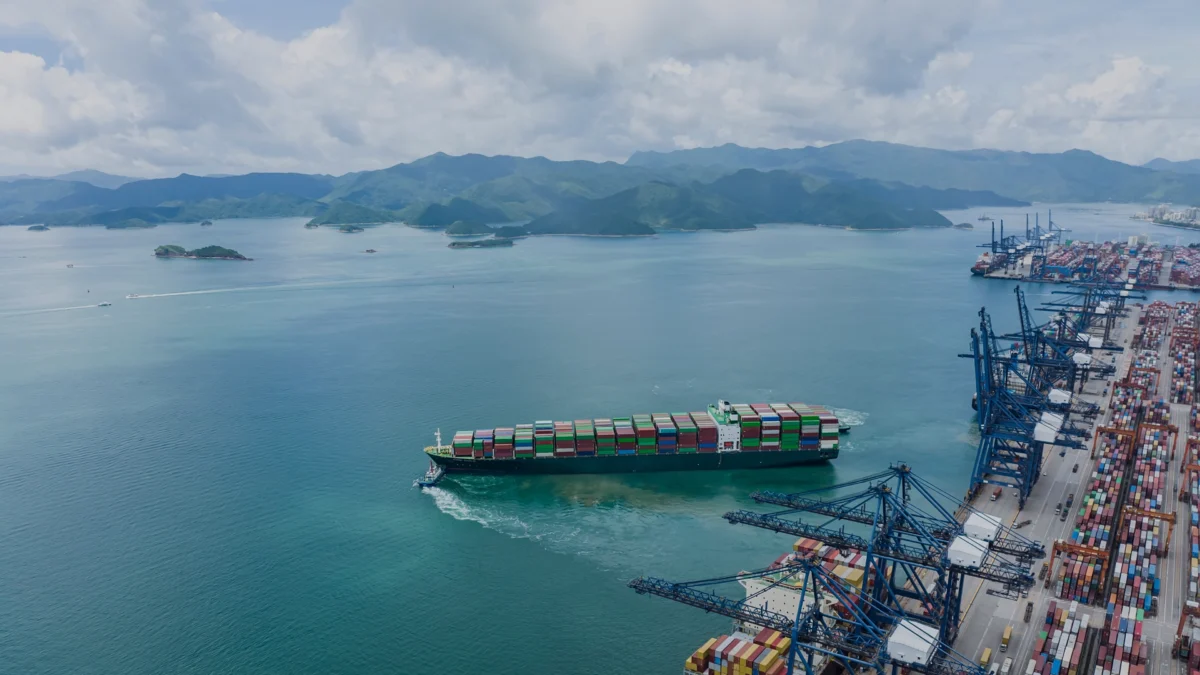
The ten companies below all have that experience, though each one is strongest in a different part of the supply chain. A longer version of this ranking, covering ten additional companies, runs at Top Custom Supply Chain Software Development Companies 2026.
Budget growth in the category backs up the demand. Gartner projects enterprise adoption of agentic AI capability in SCM software to climb from 5% in 2025 to 60% by 2030, with category spend rising from under $2 billion to $53 billion over that period. Most of that money will extend systems already in place rather than replace them.
What decided this list?
Five checks shaped who made it, weighted toward evidence a buyer can verify rather than a claim on a homepage.
- Proven delivery. Public case studies in logistics, transportation, warehousing, or manufacturing supply chains, not a general portfolio with one logistics slide added.
- System fluency. Real, documented work inside ERP, WMS, TMS, YMS, and EDI environments, integration and modernization included.
- Company record. Founding year, headcount, headquarters, and delivery footprint, confirmed against primary sources.
- Buyer breadth. Whether engagements suit mid-market operations, enterprise programs, or genuinely both.
- Applied technology. Working AI, cloud engineering, data platform, and IoT capability, applied to supply chain specifically rather than listed as a general skill.
Nobody paid to be here, and the sequence below reflects what each firm does best, not a ranking of which is strongest overall.
Trinetix
Trinetix engineers custom supply chain and logistics software for midsize and enterprise companies, covering the work from planning and procurement through execution, delivery, and post-delivery analysis.
Custom modules connect into the ERP, WMS, TMS, and EDI environments a client already runs rather than replacing them, and the portfolio spans control towers, real-time visibility, custom TMS, freight acquisition platforms with RFI and RFQ quoting automation, demand and inventory forecasting, fleet optimization, predictive maintenance, and mobile apps for logistics teams.
A centralized freight acquisition tool built by Trinetix automated manual load handling and lifted bidding performance. A separate engagement turned a legacy shipping platform into a product supporting flexible logistics process organization.
AI-driven optimization work across Trinetix engagements has produced $15 million in annual operational savings, and a Trinetix Compliance Control Tower monitors more than 1,000 freight shipments a day.
Trinetix operates out of Nashville, Tennessee and Tallinn, Estonia, with engineering centers in Ukraine, Poland, and Argentina, and it employs approximately 1,200 people after opening in 2011.
Trinetix is best for midsize and enterprise supply chain teams that need control tower visibility, AI-driven optimization, custom TMS, and freight procurement automation layered on existing ERP and WMS systems.
Intellias
Intellias engineers transportation, fleet, and logistics platforms with unusual depth in location-based services, covering road, rail, sea, and air movement across the full order lifecycle.
Its fleet products run on location technology and vehicle telematics, including a real-time truck fleet management platform delivered for a European mobility service provider.
Founded in Lviv, Ukraine in 2002, Intellias now employs more than 3,000 specialists across offices in 17 countries and serves roughly 170 enterprise clients.
Intellias is best for midsize and enterprise transportation companies building multimodal TMS, fleet management, and location-based logistics products.
SoftServe
SoftServe builds supply chain data platforms, demand forecasting systems, and manufacturing and retail analytics for enterprise clients, working mostly in the layer sitting above ERP, WMS, and TMS rather than inside them.
Partnerships with Google Cloud, AWS, Microsoft Azure, NVIDIA, Salesforce, and MuleSoft shape how it approaches integration and platform choice.
Founded in Lviv, Ukraine in 1993, SoftServe runs United States headquarters in Austin, Texas and employs more than 10,000 professionals across 17 countries. SoftServe is best for enterprise manufacturers and retailers investing in demand forecasting, supply chain analytics, and cloud data platform engineering.
Grid Dynamics
Grid Dynamics engineers supply chain optimization and inventory intelligence systems for retailers, consumer packaged goods companies, and manufacturers, applying reinforcement learning to pricing and inventory decisions at scale.
Its Intralogistics Optimization Starter Kit for NVIDIA Omniverse extends that work into warehouse simulation, and robotics partnerships push it further into physical operations.
Founded in San Ramon, California in 2006, Grid Dynamics trades on Nasdaq under GDYN, employs approximately 5,000 technical professionals across 19 countries, and received the MACH Alliance 2026 Agent Ready Award in the program’s first cohort.
Grid Dynamics is best for retail and CPG enterprises working on inventory optimization, demand planning, and warehouse simulation.

Cleveroad
Cleveroad engineers custom logistics software for midsize transportation companies, carriers, third-party logistics providers, and warehouse operators, with systems designed against ISO, GDPR, IATA, and ADR compliance standards.
A recent build for a United States logistics company paired a turnkey TMS with an automated route planning module, moved warehouse data across from the client’s existing WMS, and connected the platform to its CRM.
Founded in Tallinn, Estonia in 2011, Cleveroad now runs more than 280 in-house engineers, has delivered over 170 projects, and holds a 4.9 average rating across 79 Clutch reviews.
Cleveroad is best for midsize logistics providers, carriers, and 3PLs commissioning custom TMS, WMS, route planning, and last-mile delivery systems.
GlobalLogic
GlobalLogic engineers digital products and connected systems for manufacturing, industrial, mobility, and energy companies, working at the point where software meets physical operations.
Embedded engineering and IoT platforms tie plant and fleet equipment into enterprise applications, backed by operational technology expertise from the Hitachi Group, which GlobalLogic joined in 2021 through a $9.6 billion acquisition.
Founded in San Jose, California in 2000, it now employs more than 20,000 engineers across 20-plus countries. GlobalLogic is best for manufacturers and industrial operators connecting plant, fleet, and equipment data to supply chain systems.
Sigma Software
Sigma Software engineers logistics, transportation, and aviation software for enterprises, product companies, and startups, delivering custom TMS, warehouse systems with IoT-driven inventory insight, and visibility platforms that unify data sharing across partners. Its aviation and automotive practices give it reach beyond road freight.
Founded in Kharkiv, Ukraine in 2002 and headquartered today in Stockholm, Sweden, Sigma Software employs more than 2,100 professionals across 40 offices in 19 countries, serves more than 300 enterprise clients, and was named a leader on the 2025 IAOP Global Outsourcing 100 list.
Sigma Software is best for transport, aviation, and logistics operators that need custom TMS, WMS, and visibility platforms from a partner with aviation domain depth.
Andersen
Andersen engineers logistics and transportation software for enterprises and midsize companies alongside work in financial services, healthcare, and automotive.
Its build list includes freight management platforms handling load quoting and booking, order management systems covering shipments and returns, and warehouse management software, and it harmonizes off-the-shelf logistics products with newly built custom modules where a mixed environment calls for it.
Founded in Warsaw, Poland in 2007, Andersen now employs more than 3,500 professionals across nine countries. Andersen is best for enterprises and midsize logistics companies building freight quoting, booking, and order management platforms around existing systems.
Yalantis
Yalantis engineers IoT and connected monitoring systems for logistics, manufacturing, healthcare, and automotive operations, building the device, firmware, cloud, and application layers as one stack rather than stitching them together after the fact.
Cargo tracking, temperature monitoring with automated alerts, and driver behavior analysis make up the bulk of its logistics work.
Founded in Warsaw, Poland in 2008, Yalantis has completed more than 40 end-to-end IoT deployments, employs more than 400 specialists, holds ISO 9001, ISO 27001, ISO 27701, and ISO 13485 certification, and counts Toyota Tsusho and Bosch among its clients.
Yalantis is best for temperature-controlled and regulated logistics operations that need connected monitoring with certified compliance.
Mobisoft Infotech
Mobisoft Infotech engineers freight booking platforms, delivery applications, and fleet products for logistics operators and mobility providers, building branded trucking and freight matching platforms that operators own outright rather than license. Driver applications, dispatch tools, and real-time tracking round out most engagements.
Founded in Houston, Texas in 2010, Mobisoft Infotech employs roughly 250 people across the United States, India, Mexico, and Canada, and holds ISO 27001 certification.
Mobisoft Infotech is best for logistics operators launching their own freight marketplace, delivery, or dispatch product rather than licensing one.
Ten companies, one shared lesson
What separates these ten from a generic vendor list is that each one has already solved a version of the integration problem a buyer is about to face.
ERP, WMS, order management, carrier APIs, and EDI partners all need mapping before any timeline means anything, and a company that has already built a TMS or a control tower has done that mapping work once already. That counts for more at the proposal stage than a long list of unrelated industries served.
Company size should match program size. A multi-region rollout needs a firm with bench depth. A single custom module usually moves faster with a small team that stays the same from kickoff to launch.
