


A film ends with a spinning top still turning. Another leaves two men watching each other in the ruins of an Antarctic station.
Neither supplies the answer its audience is waiting for. Yet Inception and The Thing give their final images a purpose that extends beyond keeping a mystery alive.
An unresolved ending asks viewers to carry something out of the cinema. That can be uncertainty about an event, suspicion about a character or a choice between competing interpretations. The question is whether the film has given that uncertainty enough weight to sustain the final cut.
The Character Can Finish Before the Puzzle Does
In Inception, Cobb returns home and starts his spinning top. The film cuts before its behaviour can settle the question of whether he is dreaming.
By then, however, he has walked away to join his children. The camera stays with the test after the character has stopped watching it.
That arrangement gives the ending two different stopping points. Cobb has reached the people he wanted to see.
The viewer remains with the object that might verify his reality. His action is complete enough to read, while the physical question stays open.
This is a useful distinction for a filmmaker working on a smaller story. A character can send a message without the film showing the reply.
The ending then depends on what sending it means. Earlier scenes need to establish why that act was difficult and what has changed enough to make it possible.
The Missing Result Needs a Dramatic Reason
A film can withhold an outcome after showing a decision clearly. The cut has more weight when the character has crossed a threshold the audience understands. Leaving a room, making a confession or refusing to answer can supply that threshold.
For a hypothetical scene, a filmmaker researching online roulette through best online pokies Australia could follow a betting countdown to its close.
The player’s wager is committed before the result appears. If the character then leaves the screen, the film can end on that departure. Earlier scenes would establish what walking away means while the roulette result remains unseen.
The story still needs to earn that departure. If the character has spent the film waiting for someone else to approve every decision, leaving without checking a reply might complete an arc. If nothing earlier makes the action significant, the withheld answer has little emotional work to do.
Suspicion Can Be the Final Experience
John Carpenter’s The Thing ends with MacReady and Childs together after the destruction of the station. The film leaves their humanity uncertain.
Their final encounter continues the problem that has governed the story: another person’s appearance gives little assurance about what they are.
The audience has spent the film trying to identify an organism capable of imitation. Ending with uncertainty preserves the experience of that search.
A final reveal could provide an answer, but it would also change the last exchange between the survivors. Their watchfulness matters because neither can establish trust.
In his discussion of Inception with Wired, Christopher Nolan describes building ambiguity through earlier moments in the film.
That is a useful principle beyond his particular ending. The final question gains force when earlier scenes have already made certainty difficult. The last shot can then bring an existing tension into focus.
The Last Cut Should Leave Something Specific
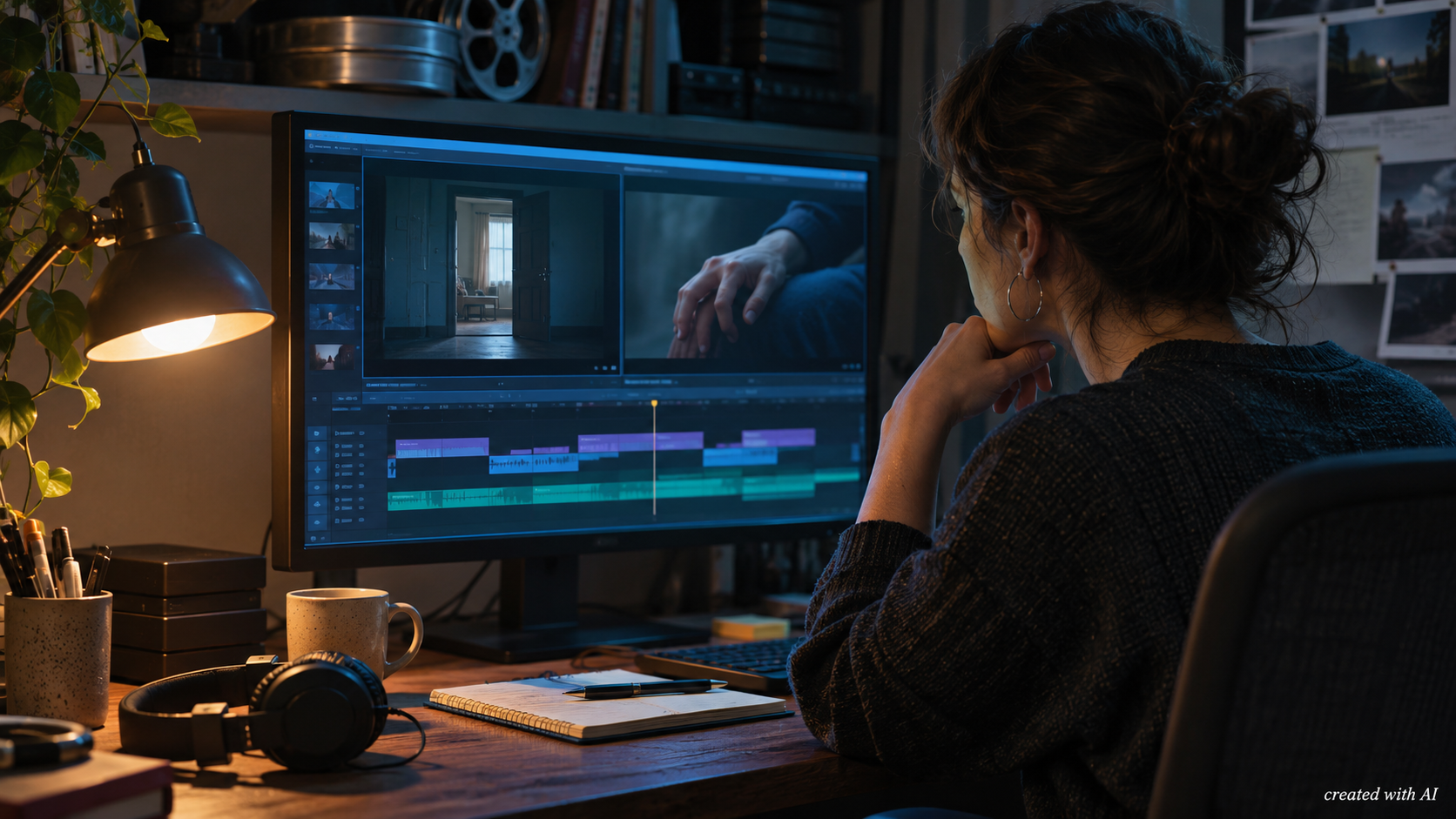
During an edit, an unresolved ending can be tested by identifying exactly what remains unanswered. A question as broad as what happens next will fit almost any story. A more precise question gives the final image something to hold.
Three checks can help when choosing where to cut:
- What has the protagonist done that cannot easily be taken back?
- Which outcome is being withheld, and why does it still matter?
- What earlier scene makes the final image meaningful?
The answers can guide practical changes. If the decision is unclear, a reaction or a pause before the action may need more time.
If the missing information overwhelms everything else, an earlier scene may need to establish the character’s priorities more clearly.
A useful final test is to imagine adding the answer. Showing the top fall would alter Inception’s last emphasis.
Identifying the survivor would alter The Thing’s final suspicion. An open ending works when that extra information would change the experience the film has deliberately built.
