

Six months ago, M1’s sale looked finished. Its owner had a signed buyer, the regulator stopped its review, and the agreement ran out.
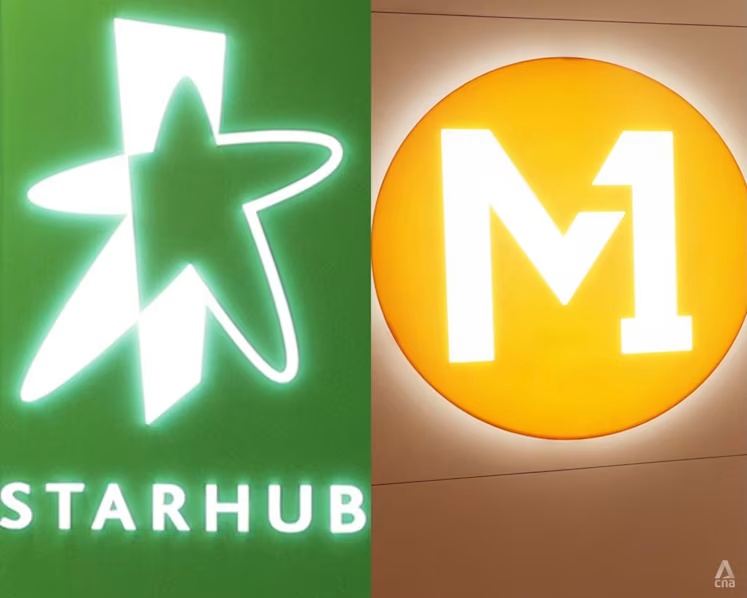
Now M1 has a new partner. It’s the one most people expected all along.
StarHub and Keppel announced on November 24, 2026 that StarHub and M1 will combine in an all-share deal. All-share means StarHub pays with newly issued StarHub shares rather than cash. Together the two telcos serve about 4.1 million customers, and they expect to close in the first half of 2027.
Same day, second move. StarHub said it had exercised its call option to buy Circles.Life’s Singapore business, at a price it didn’t disclose.
M1’s second attempt at a sale
M1 was founded in August 1994 and started selling mobile service in April 1997. StarHub’s mobile arm launched in April 2000. They have competed ever since, though they won a 5G licence together in 2020.
Keppel, which owns an effective 83.9% of M1, tried to sell it in August 2025. The buyer was Simba Telecom, at an enterprise value of S$1.43 billion, all cash. Enterprise value is a company’s share value plus its debt, the real cost of taking it over.
That deal never closed. Singapore’s telecom regulator, the Infocomm Media Development Authority (IMDA), suspended its review in May 2026, and Keppel let the agreement with Simba lapse. By September, Keppel and StarHub had confirmed they were talking.
Why Keppel took StarHub shares
No cheque for Keppel this time. It is trading M1 for an effective 23% stake in StarHub, which makes it a substantial shareholder in its old rival.
StarHub will issue about 651.7 million new shares to M1’s shareholders, roughly 27.4% of the enlarged company, with Keppel’s slice at 23% and other M1 shareholders holding 4.4%. StarHub also takes on about S$380 million of M1’s net debt. At StarHub’s market price, those shares plus the debt value M1 at around S$1.1 billion. The companies’ own pro forma math, which treats the merger as if it had already happened, lands higher: an implied S$1.36 billion, because it values each StarHub share at S$1.50 once expected savings are counted. Those savings are put at S$110 million a year by 2030, with a net present value of S$1.1 billion.
Keppel has agreed to stay invested for at least 12 months to help with integration.
StarHub CEO-designate Matt Williams summed up the logic in one line:
“Bringing StarHub and M1 together gives us the scale to invest.”
Matt Williams, CEO-designate, StarHub
The money is meant for 5G, fibre, cloud and cybersecurity. Current CEO Nikhil Eapen put it more bluntly: four operators splitting one mature market won’t build what Singapore needs next, and consolidation is his fix. Demand for that kind of capacity is everywhere now, which is how a flywheel maker born on a tree farm ended up selling AI computing.
Circles.Life comes along
A call option is a contract giving its holder the right, though not the duty, to buy something on agreed terms. StarHub held one over Circles.Life Singapore, a mobile virtual network operator, which means a brand that sells mobile plans over another company’s network.
The purchase covers Circles.Life’s Singapore subscribers, employees and brand assets. Completion still depends on the option agreement’s terms and on regulators.
StarHub also chose Circles X, the Circles group’s AI-based operating platform, for some consumer mobile services, a sign that AI companies see the phone call as only the front door.
So Keppel sold M1 and kept a piece of it?
Pretty much, and that says a lot about how hard M1 was to sell.
The cash deal died at the regulator. The deal that survived pays in stock and keeps Keppel tied to the buyer for at least a year.
StarHub, meanwhile, has been collecting brands. It took full ownership of MyRepublic Broadband in 2025, agreed to buy MyRepublic’s mobile business in October, and now adds M1 and Circles.Life. The merged group will sell under premium, digital and value brands.
Then there’s the timing. Eapen, who steps down at the end of 2026, signs a deal this size five weeks before he goes.
Two votes, two government sign-offs and a new CEO
Williams takes over as StarHub CEO on January 1, 2027, as the company’s June announcement set out.
The merger needs approval from IMDA and the Ministry of Digital Development and Information, plus StarHub and Keppel shareholders at separate extraordinary general meetings, which are shareholder votes held outside the annual meeting. Asia Mobile Holdings, StarHub’s controlling shareholder, will abstain at StarHub’s meeting. Temasek, Keppel’s controlling shareholder, will abstain at Keppel’s.
Until completion, StarHub and M1 keep operating and competing separately, and customers keep their current plans. If everything clears, the merger and the
