

Most trade contractors didn’t get into the business to do paperwork. You got into it because you’re great at fixing things, building things, and solving problems on the job site.
But at the end of every day, there’s a stack of invoices waiting, and the way you handle them could be quietly draining your business.
Paper invoices might feel simple. Familiar. “The way it’s always been done.” But when you actually add up the time, money, and opportunities lost to manual invoicing, the numbers tell a different story.
The Hours You Don’t Bill For
Let’s start with time, because for a solo contractor or a small crew, time is the most expensive thing you have.
Writing out invoices by hand, copying job details onto paper forms, driving to drop them off or swinging by the post office: it adds up.
Most contractors who rely on paper invoices spend somewhere between 5 and 10 hours per week on invoicing and payment follow-ups. That’s an entire working day, every single week, spent on tasks that don’t generate revenue.
Now multiply that by a year. At even a modest hourly rate of $75, those 5 hours a week represent over $19,000 in lost billable time annually. For a small crew doing 15 to 20 jobs a week, the number climbs even higher.
The Invoices That Never Get Paid
Here’s the part that really hurts: paper invoices get lost. They get left on kitchen counters, buried under mail, thrown away by mistake.
The client doesn’t ignore you on purpose (usually), but if your invoice isn’t right in front of them, it falls to the bottom of their to-do list.
According to the 2025 Intuit QuickBooks Small Business Late Payments Report, 56% of U.S. small businesses are currently owed money from unpaid invoices, with the average outstanding amount sitting at around $17,500 per business.
Nearly half of those businesses have invoices that are more than 30 days overdue. For a contractor whose monthly expenses run $8,000 to $12,000, that kind of gap between doing the work and getting paid can mean the difference between making payroll and dipping into savings.
And then there’s the follow-up. Calling clients to remind them about unpaid invoices is awkward and time-consuming.
Many contractors simply avoid it, letting money sit on the table rather than having an uncomfortable conversation.
Errors That Cost You Money
A handwritten invoice leaves plenty of room for mistakes. Transposed numbers, forgotten line items, math errors: these aren’t just embarrassing, they directly impact your bottom line.
Industry data backs this up. According to accounts payable research compiled by DocuClipper, roughly 39% of invoices contain errors, and the average cost of processing a single invoice manually runs about $15.
For trade contractors processing dozens of invoices per week, those per-invoice costs and error rates compound fast.
Undercharging by even $50 on a job because of a calculation mistake doesn’t seem like much. But across 10 jobs a week, that’s $500.
Across a year, it’s $26,000. And unlike a pricing error you catch in software, a paper mistake often goes out the door before anyone notices.
On the flip side, overcharging creates client disputes that eat up even more of your time and damage trust. Either way, you lose.
The Professional Image Problem
Your invoice is often the last touchpoint a client has with your business. It’s what sits in front of them when they decide whether to recommend you to a neighbor or leave a review.
A crumpled handwritten invoice on a generic pad doesn’t exactly scream “professional operation.” It might not seem fair, but clients judge the quality of your work partly by how you present your business.
Clean, itemized, branded invoices signal that you run a tight ship, and that perception directly influences referrals, repeat business, and your ability to charge premium rates.
The Tax Season Nightmare
Every contractor who has ever scrambled through a shoebox of receipts and invoice copies in April knows this pain. Paper records are hard to organize, easy to lose, and a nightmare to reconcile.
Accountants regularly report that clients using paper-based systems pay more in preparation fees simply because the work takes longer.
And if you’re ever audited, reconstructing a year’s worth of paper invoices is the kind of project that keeps you up at night.
Paper vs. Digital: A Side-by-Side Look
| Paper Invoicing | Digital Invoicing | |
| Time to create and send | 15-30 min per invoice | 2-5 min per invoice |
| Average processing cost | $15-26 per invoice | $2.50-4 per invoice |
| Payment turnaround | 30+ days on average | Often same-day or within a week |
| Error rate | ~39% of invoices contain errors | Auto-calculated totals, near-zero math errors |
| Record keeping | Shoeboxes, filing cabinets, lost receipts | Searchable digital archive, tax-ready |
| Client experience | Generic, hard to read, no online payment option | Branded, professional, pay-in-one-click |
What Switching Actually Looks Like
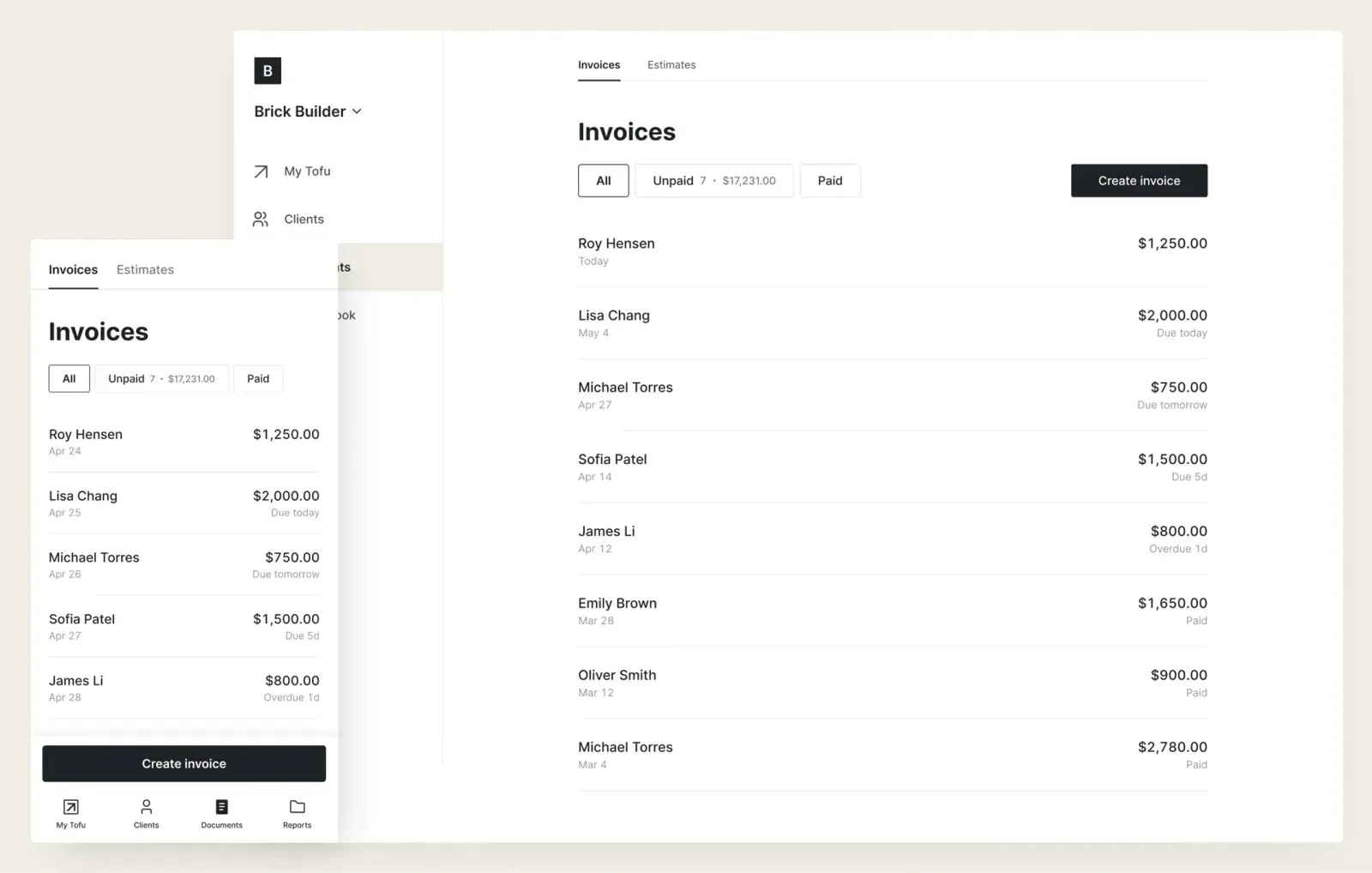
The good news is that moving away from paper doesn’t require a massive tech overhaul. Modern field service invoicing software is built specifically for contractors and small crews, not for people who want to learn accounting.
The shift typically looks like this: you finish a job, pull out your phone, create an invoice from the job details that are already in the system, and send it to the client on the spot.
They get a professional, itemized invoice immediately, with the option to pay right then and there. No printing, no stamps, no “I’ll send it when I get home.”
For most contractors, the transition takes less than a day, and the payoff starts immediately with faster payments, fewer errors, and hours of your week freed up.
Adding Up the Real Cost
When you combine lost billable hours, delayed payments, invoicing errors, missed professional impressions, and tax preparation headaches, the true cost of paper invoicing for a small trade business easily reaches $30,000 to $50,000 per year.
That’s not a rounding error. That’s a new truck. That’s hiring help. That’s the margin between surviving and actually growing.
The tools exist to fix this, and they’re designed for people who’d rather be on a job site than behind a desk. The only real question is how long you’re willing to keep paying the paper tax.
