

Counterfeit exposure reaches marketplaces, search results, review platforms, and social profiles at the same time, which turns brand protection into a daily operational task.
According to the FBI’s IC3 Annual Report for 2025, cybercrime losses in the United States exceeded $20 billion, reflecting the growing cost of fraud, phishing, and impersonation for online businesses.
Brand protection requires access to the public data that customers see in different markets. Search results, marketplace listings, and seller pages often change by location, which limits what teams can detect from one IP or one region.
Proxies make that monitoring process more effective because they help systems check public pages across multiple geographies and spot abusive listings with better accuracy.
Why Is Brand Monitoring Harder in 2026?
Wide digital coverage has become the core requirement for effective protection because harmful listings, fake profiles, and cloned offers can surface across many public platforms at once.
Strong monitoring depends on consistent access to public pages in different regions, repeated checks over time, and clean data collection from the same sources customers actually see.
Digital Abuse Has Become More Fragmented
Scattered exposure creates the first major challenge. A single product line can appear on large marketplaces, small reseller sites, social commerce pages, and review platforms within the same monitoring cycle.
Search engines, local results, and platform-specific discovery pages add another layer, which means one fixed view rarely captures the full picture.
Threats Spread Across Too Many Public Channels
Broad channel coverage has become essential for teams that need early detection. Unauthorized sellers can surface in shopping results, counterfeit offers can move into regional marketplaces, and reputation attacks can grow through fake reviews or impersonation profiles. Monitoring loses depth when checks stay limited to one platform or one geography.
Regional Visibility Changes the Picture
Local access shapes detection quality. Search rankings, product listings, seller pages, and review results often differ by country and city, which means a brand can miss live abuse when teams only inspect one location.
Proxy-based monitoring supports broader verification because it gives systems a way to check public pages from multiple markets with cleaner regional visibility.
What Should Brands Monitor First?
The highest priority areas are the ones that directly affect revenue, customer trust, and enforcement speed. Clear focus helps teams catch the most damaging issues early and keep monitoring cycles efficient.
- Counterfeit Listings: Fake product pages can divert sales and weaken trust in authentic offers.
- Unauthorized Sellers: Unapproved resellers can disrupt pricing control and create channel conflict.
- Fake Reviews: Manipulated ratings can influence purchase decisions and distort brand perception.
- Brand Impersonation: Copied profiles and fake accounts can mislead customers across social and commerce platforms.
- Phishing and Lookalike Domains: Deceptive domains can support fraud, abuse, and customer confusion.
- Localized Search Results: Harmful pages may only appear in specific regions or language settings.
Why Do Proxies Matter for Brand Monitoring and Protection?
Reliable access to public data supports stronger enforcement because teams need a wider view of what appears online across locations and platforms.
Proxy infrastructure helps monitoring systems collect cleaner public results, repeat checks more consistently, and reduce visibility gaps across regional surfaces.
Access to Local Search and Marketplace Results
Regional visibility is one of the biggest operational needs in brand protection. Search engines and marketplaces often present different seller pages, offers, and rankings based on the user’s location.
Geo-targeted proxies help monitoring tools inspect those local versions with more precision and stronger coverage.
Stable Checks Across Repeated Monitoring Cycles
Consistent rechecking supports faster detection of copied listings and seller activity. Monitoring tools often need to revisit the same page sets, compare fresh results, and track changes over time. Rotating IP infrastructure helps maintain continuity across those repeated public checks.
Better Coverage Across Large Platform Sets
Scale matters when a brand tracks many SKUs, regions, and abuse signals. Monitoring systems may need to scan search results, marketplace pages, review surfaces, and social pages in parallel.
Strong proxy coverage supports that wider collection process and gives enforcement teams a more complete working view.
What Are the 6 Best Proxies for Brand Monitoring and Protection in 2026?
Reliable brand monitoring depends on consistent access to public data across search engines, marketplaces, and regional platforms where abusive listings and impersonation attempts appear.
Proxy infrastructure supports this process by enabling location-based data collection, repeated checks, and broader visibility across multiple regions and channels.
The following providers deliver the core capabilities required for brand monitoring and protection workflows in 2026.
| Proxy Service | Types of Proxies | Session Modes | Protocols | Pros |
| Live Proxies | Rotating residential, rotating mobile | Sticky sessions up to 24 hours, rotating options for residential and mobile plans | HTTP, SOCKS5 | Private IP allocation, unlimited threads, 24/7 support, coverage in 55+ countries |
| Webshare | Datacenter, static residential, rotating residential | Fixed-IP static options plus rotating endpoints with customizable refresh from 5 minutes to 1 month | HTTP, SOCKS5, SSL/HTTPS | Three main proxy product lines, 99.97% uptime on proxy servers, and flexible rotation controls |
| Infatica | Residential, mobile, datacenter, ISP | Timed rotation, rotation on each request, or sticky sessions | HTTP, HTTPS, SOCKS5 | Multiple proxy types on one platform, geo-targeting support, residential documentation includes flexible rotation controls |
| ProxyEmpire | Rotating residential, rotating mobile, rotating datacenter, static residential | Rotating and sticky sessions on rotating pools, fixed-IP static residential plans for month-long use | HTTP, HTTPS, HTTP/2, SOCKS5 | Country, region, city, and ISP targeting, 24/7 support, hundreds of locations on rotating residential |
| IPRoyal | Residential, mobile, ISP, datacenter | New IP on each request or sticky sessions up to 7 days | HTTP(S), SOCKS5 | Unlimited simultaneous sessions on residential proxies, API access, broad product mix |
| SOAX | Residential, mobile, ISP, datacenter | Rotate on each request or keep the same IP for an extended period with custom session lengths | HTTP, HTTPS, SOCKS5 | 191M+ proxy IPs, wide geolocations, unlimited connections |
1. Live Proxies
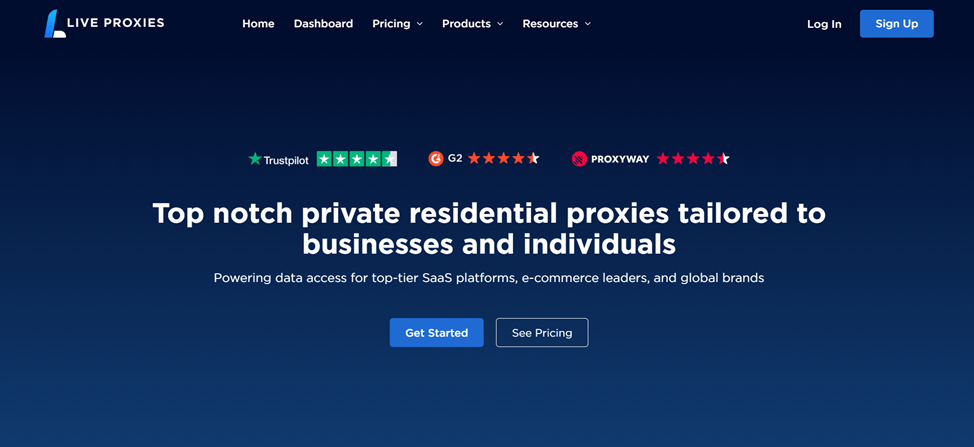
Live Proxies supports large-scale monitoring across multiple regions with unlimited bandwidth residential proxies and mobile IPs.
The network covers millions of IPs across 55+ countries and supports country, city, and ASN targeting, which gives teams more control over localized checks for search, marketplace, and seller visibility.
A free proxy tester is available for Mac and Windows, so you can verify location, ISP data, speed, and connection behavior before sending traffic into production.
Session handling is one of the stronger parts of the offer because sticky connections can hold the same identity for up to 24 hours when a workflow needs continuity across multiple steps.
Private allocation helps Live Proxies keep assigned IP resources tied to specific accounts, workflows, or targets instead of relying only on broad shared pools.
This matters for repeated monitoring and larger enterprise proxies because teams get cleaner routing, lower overlap, and more predictable access patterns.
Advantages
- Unlimited Threads: Higher concurrency supports broader scans across multiple sellers, pages, and regions in parallel.
- 24/7 Support: Round-the-clock assistance helps when setup or troubleshooting needs immediate response.
- Sticky Sessions up to 24h: Keeps the same IP during multi-step workflows where session continuity matters.
- B2B Free Trial: Enterprise evaluation is available before a larger rollout moves into a paid configuration.
Current pricing
Residential plans start at $70 for 4 GB for 30 days (200 IPs). Mobile plans start at $70 for 4 GB for 30 days (50 IPs).
2. Webshare
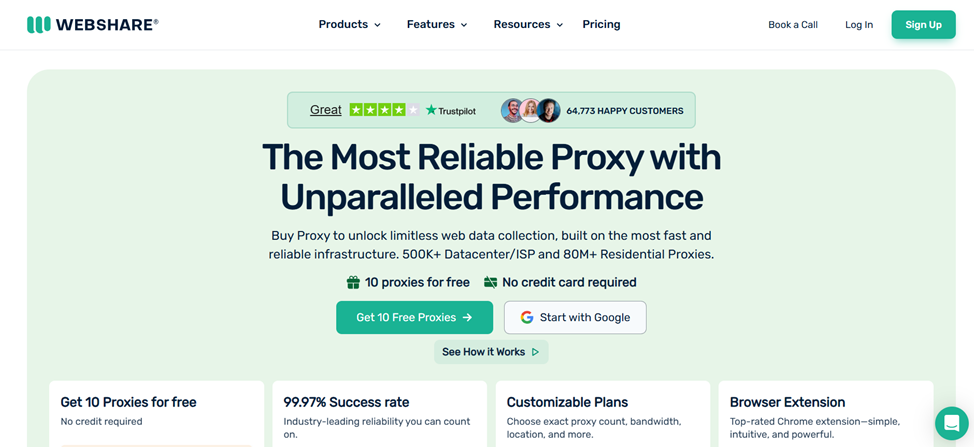
Webshare centers its residential offer on a pool of more than 80 million residential IPs and lists 50+ countries for location coverage.
Residential traffic runs through HTTP and SOCKS5 endpoints, and the service states 99.7% uptime for its residential network.
That combination fits monitoring jobs that need broad geo coverage and standard protocol support without moving into more complex enterprise-only tooling.
Connection control is one of the more distinctive parts of the platform. Webshare supports three access methods for residential traffic: direct connection, a rotating proxy endpoint, and a backbone connection, with the rotating endpoint assigning a fresh proxy from the list on each request in random order.
The provider also describes sticky sessions as time-bound identity persistence for multi-step workflows where the same IP needs to stay active across a defined request window.
Advantages
- 80M+ Residential IPs: Large IP volume gives broader coverage for repeated monitoring tasks across many endpoints.
- 195-Country Coverage: Wide location spread helps compare regional results without narrowing checks to a small market set.
- 99.7% Residential Uptime: More stable availability supports scheduled runs and recurring collection workflows.
- Custom Plans up to Unlimited Traffic: Higher-volume teams can move beyond standard bandwidth tiers when workloads grow.
- Developer Support Stack: API docs, quick-start resources, and integration materials make setup easier for technical teams.
Current pricing
Residential pricing starts at $3.50 per month for 1 GB of traffic.
3. Infatica
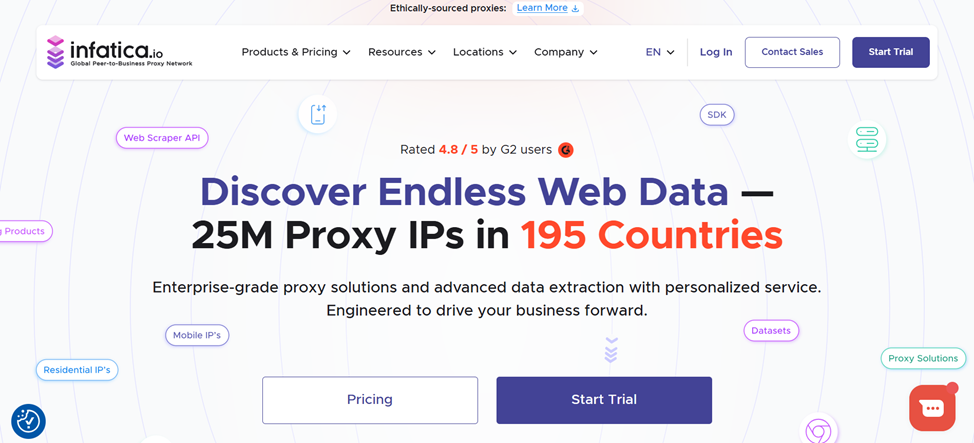
Infatica lists 35 million+ IPs for its residential network and supports country, city, and ZIP targeting for location control.
Residential access can be authenticated through login and password or an IP whitelist, and rotation timing can be selected inside the product controls.
That setup suits monitoring teams that need both localized collection and configurable identity handling on repeated checks.
A residential network with 99.9% uptime and a 0.4-second response time gives Infatica solid baseline performance for recurring monitoring tasks.
Provider presents two billing structures for proxy use, with pay-as-you-go traffic and larger prepaid bandwidth packages available in the same pricing system.
For brand monitoring, that matters when workloads move between smaller alert-driven checks and heavier scheduled collection cycles.
Advantages
- 7-Day Trial Entry: Trial access is available for $4, which lowers the cost of validating fit before a larger commitment.
- Unlimited Proxy Lists on Custom Plans: Larger accounts can generate multiple lists under custom pricing rather than work from a single fixed allocation.
- 24/7 Priority Support for Customized Plans: Higher-volume customers get a support tier positioned above standard package support.
- Dashboard-Based Geo Changes: Geolocation can be changed from the management controls without rebuilding the whole account structure.
- Enterprise Threshold from 1 TB: Large-data plans start at 1 TB of traffic for companies that need heavier recurring volume.
Current pricing
Residential pricing starts at $4 per GB on pay-as-you-go and $96 for 25 GB on prepaid bandwidth.
4. ProxyEmpire
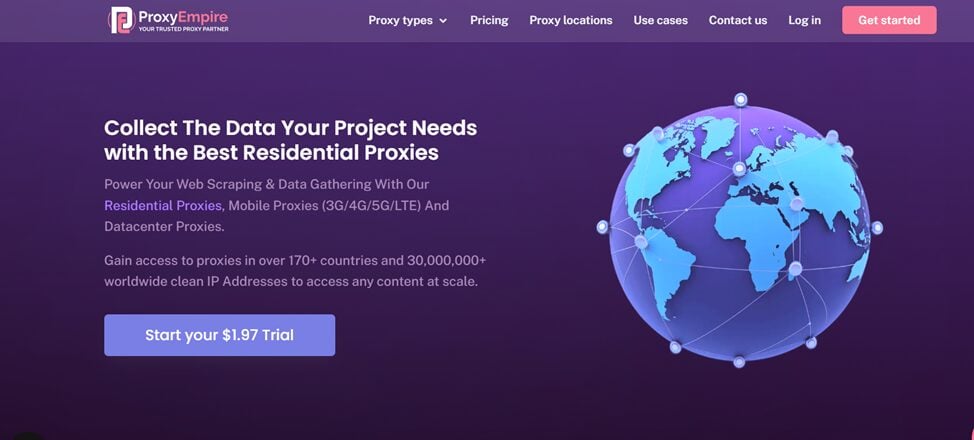
ProxyEmpire provides access to over 30 million residential IPs across 170+ countries. Targeting supports country, region, city, ISP, and ASN levels, while connections run through HTTP, HTTPS, and SOCKS5 protocols.
That level of targeting precision is useful for monitoring teams that need to compare localized search, seller, and marketplace results with tighter control than country-only routing provides.
The network runs with 99.86% uptime, a 99.56% success rate, and a 0.6-second average response time. ProxyEmpire also allows unlimited concurrent connections and carries unused residential data forward through its rollover system, which changes the economics for teams running uneven monthly monitoring volumes.
VIP setup support is included across plans, which can matter when the proxy layer needs to be mapped into more complex automation or collection stacks.
Advantages
- $1.97 Trial: Low-cost trial access makes it easier to verify routing quality before moving into larger packages.
- 5 TB+ Custom Plans: High-volume buyers can move into custom residential pricing from 5 TB upward.
- 5M+ Mobile IPs: Mobile inventory extends the platform beyond residential-only collection.
- Mobile Carrier Targeting: Carrier-level filtering is available in the mobile layer for narrower location and network matching.
- No Concurrent Session Limit: Residential usage is not capped by a hard concurrency ceiling.
Current pricing
Residential pricing starts at $40 for 7 GB, with pay-as-you-go listed at $7 per GB and a $1.97 trial available.
5. IPRoyal
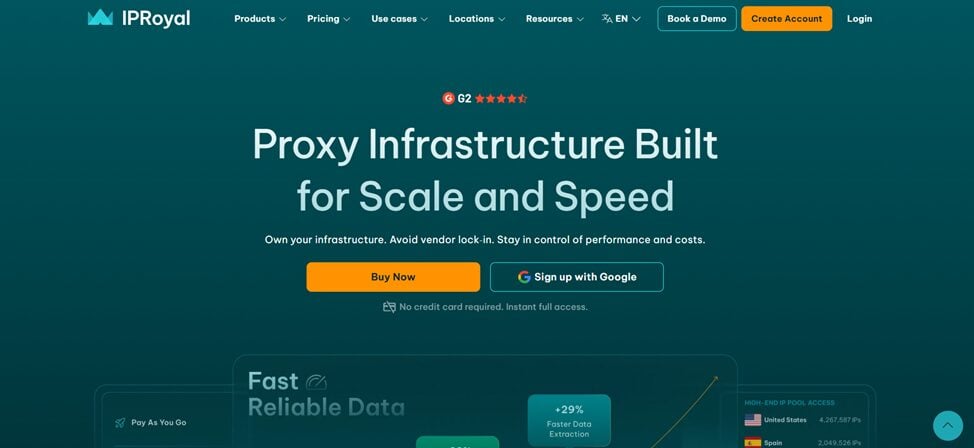
With coverage across 195 countries, IPRoyal’s residential network includes more than 32 million IPs. Geo-targeting extends beyond the country level to state, city, and ISP selection, and residential traffic supports both HTTP(S) and SOCKS5.
The service also uses non-expiring residential traffic, which changes purchasing flexibility for teams that do not consume bandwidth on a predictable monthly cycle.
Session control is unusually broad on the residential side. IPRoyal allows a fresh IP on every request or a sticky session that can hold for anything from one second to seven days, which gives monitoring teams more room to match rotation to the task rather than force a single default mode.
That range can be useful when one workflow needs brief high-churn checks, and another needs a stable identity across longer review or login sequences.
Advantages
- Flexible Entry Sizes: Residential plans are available in 1 GB, 2 GB, 10 GB, and 50 GB tiers instead of one fixed starter bundle.
- Bulk Discounts: Per-GB cost falls as larger traffic blocks are purchased.
- No Commitment Purchase Model: Residential bandwidth can be bought without a monthly contract requirement on the starter tiers.
- Custom Sales Route for Larger Needs: Enterprise-scale setups are handled through a separate custom-plan path.
- 195-Country Reach: Global distribution is broader than many mid-market proxy offers that stop closer to regional coverage.
Current pricing
Residential pricing starts at $7 per GB, with non-expiring traffic on a pay-as-you-go.
6. SOAX
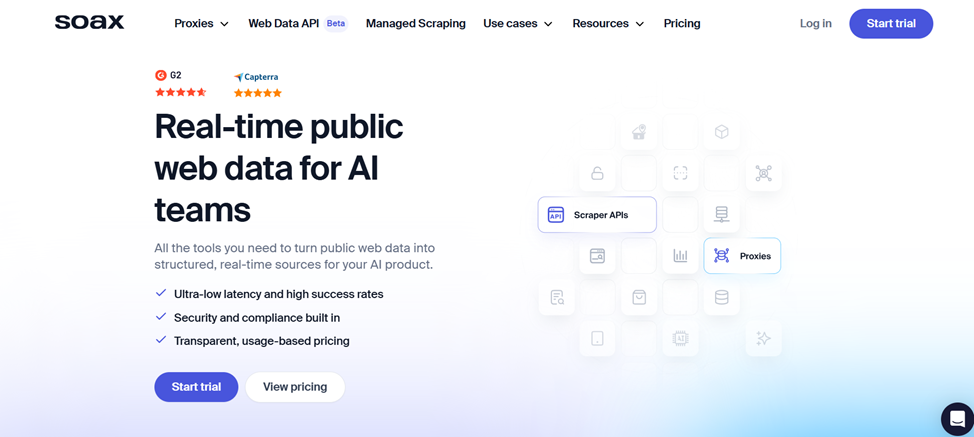
SOAX positions its network around 191+ million proxies globally, including 155+ million residential IPs across 195+ locations.
Residential traffic supports HTTP(S), SOCKS5, and UDP/QUIC, while the product also allows unlimited concurrent sessions for higher-throughput collection jobs.
For teams handling monitoring across many regions at once, that mix gives both broad location coverage and protocol flexibility.
Rotation can be configured from the dashboard rather than locked to a single default pattern. SOAX allows IP refresh on every request or at a custom interval of up to one hour.
Overall performance is reflected in a 99.95% success rate, 99.9% uptime, and a 0.55-second response time.
The company also uses a unified subscription model, so the same data allowance can be applied across residential, mobile, US ISP, datacenter, scraper APIs, and the Web Data API.
Advantages
- 33M+ Mobile Proxies: Mobile inventory is large enough for teams that need a second network type inside the same account.
- 2.6M+ ISP Proxies: US ISP inventory is included in the unified platform instead of being sold as a separate ecosystem.
- API Access: Proxy management can be handled programmatically for faster integration into automation pipelines.
- Ethically Sourced Network: Official materials repeatedly frame the proxy pool around ethical sourcing standards.
- Single Data Allowance Across Tools: One subscription can be used across proxy types and data products without separate balances.
Current pricing
Starter pricing is $90 per month for 25 GB, which equals $3.60 per GB.
What Tasks Do Proxies Support in Brand Monitoring ?
The strongest proxy networks support the operational checks that matter most in brand protection, including counterfeit detection, unauthorized seller tracking, and regional visibility analysis.
Coverage, session control, and geo-targeting quality shape how accurately teams can collect public data across changing markets and platforms.
Counterfeit Listing Detection
Counterfeit monitoring depends on consistent access to product pages, marketplace listings, and search results across multiple locations.
A strong proxy setup helps teams compare suspicious offers by region, identify copied product data, and capture public evidence without relying on one local view. That matters when fake listings surface in one market first and spread into broader distribution later.
Unauthorized Seller Tracking
Seller enforcement requires repeated checks across marketplaces, reseller pages, and pricing environments where brand terms appear under different merchant names.
Stable sessions help when a workflow needs continuity across several pages, while rotation helps broader scans that cover many listings in one cycle.
Stronger proxy infrastructure makes it easier to verify pricing abuse, policy violations, and repeated seller activity with cleaner regional visibility.
Regional Search and Reputation Monitoring
Brand risk often appears in localized search results, review environments, and region-specific landing pages that do not look identical across markets.
Geo-targeted access helps teams detect harmful pages, misleading offers, and reputation issues that stay hidden in a single-country review flow.
This becomes more important when enforcement depends on what users actually see in a specific city, country, or language setting.
Conclusion
Brand monitoring and protection require steady access to public data across search results, marketplaces, seller pages, review platforms, and regional digital environments.
Proxy infrastructure supports that work by expanding geographic visibility, improving session control, and making repeated checks more reliable across the channels where counterfeit listings, unauthorized offers, impersonation, and reputation threats appear.
Effective monitoring depends on consistent regional access, accurate local results, and the ability to collect data at scale without interruptions.
Strong proxy coverage helps brands track abuse earlier, verify risks across markets, and maintain a clearer view of how their products, sellers, and reputation appear online.
