


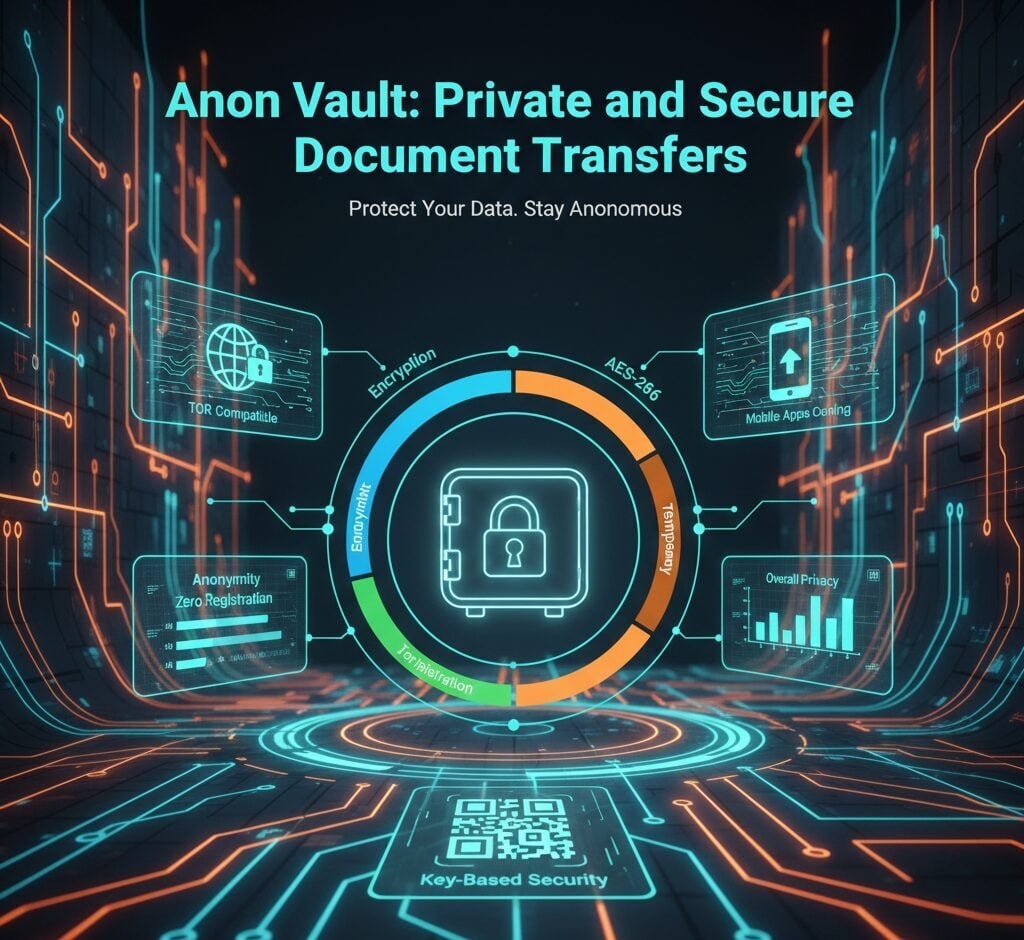
Online safety matters more than ever in 2026. Many people worry about their personal data. Companies track users constantly. Governments monitor internet activity. This reality has made Anon Vault popular among privacy-focused individuals worldwide.
What is Anon Vault?
Anon Vault lets people store and send documents without revealing their identity. Users don’t need accounts or passwords. The platform encrypts everything on your device before uploading.
Your actual data never reaches their servers in readable form. This tool works well for lawyers, reporters, and researchers. Similar platforms have gained attention since companies like Facebook faced scrutiny over data handling practices.
How Anon Vault Works
The platform operates through browser-based encryption. AES-256 coding happens locally before upload. Users receive a special link containing the decryption code.
Documents vanish after expiration settings trigger. The decryption code stays embedded within your browser. Servers cannot read it.
Key Features of Anon Vault
| Feature | Description |
|---|---|
| Browser Encryption | AES-256 coding happens locally before upload |
| Anonymous Access | Zero registration or email required |
| Temporary Storage | Documents vanish after set time or downloads |
| TOR Compatibility | Hidden network browsing supported |
| Key-Based Security | Only link holders can view content |
End-to-End Encryption
The platform collects no metadata. It stores no passwords. Major technology firms like IBM have pioneered similar encryption methods over decades.
Anon Vault prioritizes user protection above all else. Every file receives military-grade encryption standards.
Zero Registration Process
Open the website through a regular or TOR browser. Select your document for upload. Choose expiration settings measured in hours, days, or download limits.
Receive your unique link. Share through secure messaging apps. Document disappears after expiration.
Privacy-First Architecture
The system employs zero-knowledge protocols. Even Anon Vault administrators cannot access your files. This approach differs from traditional cloud services where providers maintain backend access.
Security Assessment
Independent experts have reviewed Anon Vault extensively. Security professionals from organizations similar to Check Point Software conduct regular audits.
Privacy Scores by Category
Using Anon Vault Step by Step
Step 1: Access the Platform
Open your browser. Navigate to Anon Vault. No account creation needed. No personal information required.
Step 2: Select Your File
Click the upload button. Choose your document. The platform accepts various file formats. Technology companies like Micron Technology have developed storage solutions that enable such versatile file handling.
Step 3: Configure Settings
Set expiration time. Choose between hours or days. Alternatively, set download limits. Files auto-delete after conditions meet.
Step 4: Receive Your Link
Copy the generated link. Share through encrypted channels. The link contains your decryption key.
Step 5: Monitor and Delete
Track remaining time. Files automatically vanish. No manual deletion required.
Potential Limitations
Every tool has boundaries. Anon Vault presents certain challenges. Lost codes mean permanent document loss.
Customer support remains minimal. Browser configuration matters greatly. Outdated software may cause problems.
Users should understand these factors beforehand. Companies that provide IT services, such as Cognizant Technology, often recommend proper preparation to prevent issues.
Best Practices for Secure Use
- Update your browser regularly
- Send links only through encrypted messengers
- Enable VPN or TOR connections
- Remove unnecessary browser add-ons
- Clear browsing history frequently
- Store decryption codes separately
Who Should Use Anon Vault
Media Professionals
Reporters protecting sources rely on anonymous file sharing. Journalists covering sensitive topics need secure channels. News organizations require confidential document exchange.
Legal Teams
Lawyers managing confidential cases benefit from encryption. Legal professionals exchange privileged information. Law firms protect client communications.
Researchers and Scientists
Scientists exchanging sensitive research use secure platforms. Academic institutions share preliminary findings. Research teams collaborate across borders.
Privacy-Conscious Users
Regular people avoiding corporate surveillance choose encrypted tools. Privacy advocates protect personal data. Individuals value anonymity online.
Security Specialists
Professionals testing systems require secure file transfer. Organizations like VeriSign have established security testing protocols that many specialists follow when evaluating platforms.
Comparing Anon Vault to Alternatives
| Platform | Encryption | Registration | Expiration |
|---|---|---|---|
| Anon Vault | AES-256 | None | Yes |
| Standard Cloud | Varies | Required | Manual |
| Email Attachments | Limited | Required | No |
Planned Improvements
The platform continues evolving. Planned additions include mobile applications. Batch uploads will arrive soon.
Quantum-resistant coding methods enter development. These improvements will strengthen Anon Vault against future threats. Technology firms like CA Technologies pioneered similar advancement strategies in software security.
Industry Context
Privacy tools have become essential. Corporate security evolved throughout history. Organizations now prioritize data protection.
Major technology providers invest heavily in security infrastructure. Companies like World Wide Technology deliver cybersecurity solutions to thousands of clients worldwide.
The shift toward user-controlled protection accelerates. Encryption standards continue improving. New threats emerge constantly.
Technical Requirements
Modern browsers work best with Anon Vault. Chrome, Firefox, and Safari all function properly. Edge and Brave also support the platform.
TOR browser adds extra anonymity. VPN services enhance privacy further. Combined usage maximizes protection.
JavaScript must stay enabled. Cookies should allow session data. Pop-up blockers need configuration adjustments.
Data Retention Policies
Anon Vault retains zero user information. No email addresses get collected. IP addresses remain unlogged.
Encrypted files delete automatically. Storage servers clear expired data. No backup copies exist anywhere.
This policy differs from traditional providers. Most cloud services maintain data indefinitely. Recovery options typically require stored information.
Future of Anonymous File Sharing
Demand for privacy tools grows yearly. Government surveillance expands globally. Corporate data collection intensifies.
Encryption technology advances rapidly. Quantum computing threatens current standards. Developers prepare quantum-resistant solutions.
Blockchain integration may arrive eventually. Decentralized storage could enhance security. Zero-knowledge proofs might become standard. Consulting firms like CGI Group help organizations navigate these technological shifts.
Common Use Cases
User Distribution by Type
FAQs
What happens if I lose my decryption link?
The file becomes permanently inaccessible. Anon Vault cannot recover lost links. Always store links in secure locations before sharing.
Can Anon Vault see my uploaded files?
No. All encryption happens on your device before upload. The platform employs zero-knowledge architecture. Even administrators cannot access file contents.
How long can files remain stored?
Users set custom expiration times. Options range from one hour to several days. Files automatically delete after the chosen period expires.
Is Anon Vault compatible with mobile devices?
Yes. Mobile browsers support the platform. Functionality remains consistent across devices. A dedicated mobile app is under development.
Does using TOR provide additional security?
TOR adds another anonymity layer. It masks your IP address. Combined with Anon Vault encryption, TOR maximizes privacy protection significantly.