


Online poker companies build businesses around shared play. Their histories take shape through the events they organize, the audiences they address, and the identities they develop around their rooms.
A tournament series turns individual games into a named program; guides and media activity carry information about that program beyond the tables.
Following those developments reveals how a poker company builds an offering over time, alongside the software through which people reach it.
The commercial foundations came earlier. Analysys Mason’s history of the commercial internet describes the 1995 transition to commercial networks and new interconnection arrangements.
Cybercultural’s account of 1995 also records the arrival of tools for interactive websites. Connectivity and interaction supplied part of the setting for online services, including poker rooms that organized games among participants in different places.
From a 2016 launch to a 2018 tournament series
The brand behind Ignition Poker dates its launch to 2016 in its own historical account. Its poker business developed within an already commercial internet, where a company could organize participation without bringing everyone into one physical room.
The brand’s subsequent tournament material gives that development a more specific shape: named festivals, individual events within their schedules, and instructional publishing connected to the poker being played.
By 2018, the brand was hosting the Super Millions Poker Open. A company tournament guide records Event 62 from that series, which attracted 195 entries.
That figure describes participation in one tournament within the festival. The series itself supplied a common identity for a wider program of events.
A named festival gives an online poker company a recurring subject to organize and communicate. Individual tournaments occupy places in the schedule, while the series provides the larger occasion.
Players encounter both the room’s continuing offering and the particular events assembled under the festival name.
The company also used that completed 2018 tournament in its publishing. It appears in the final part of a three-part guide covering the opening, middle, and final stages of multi-table tournaments. The business was drawing on an event from its own program to explain tournament play.
Event organization and publishing therefore connected through an actual example, with the guide providing material that remained available after the tournament had finished.
A content partnership announced in 2022
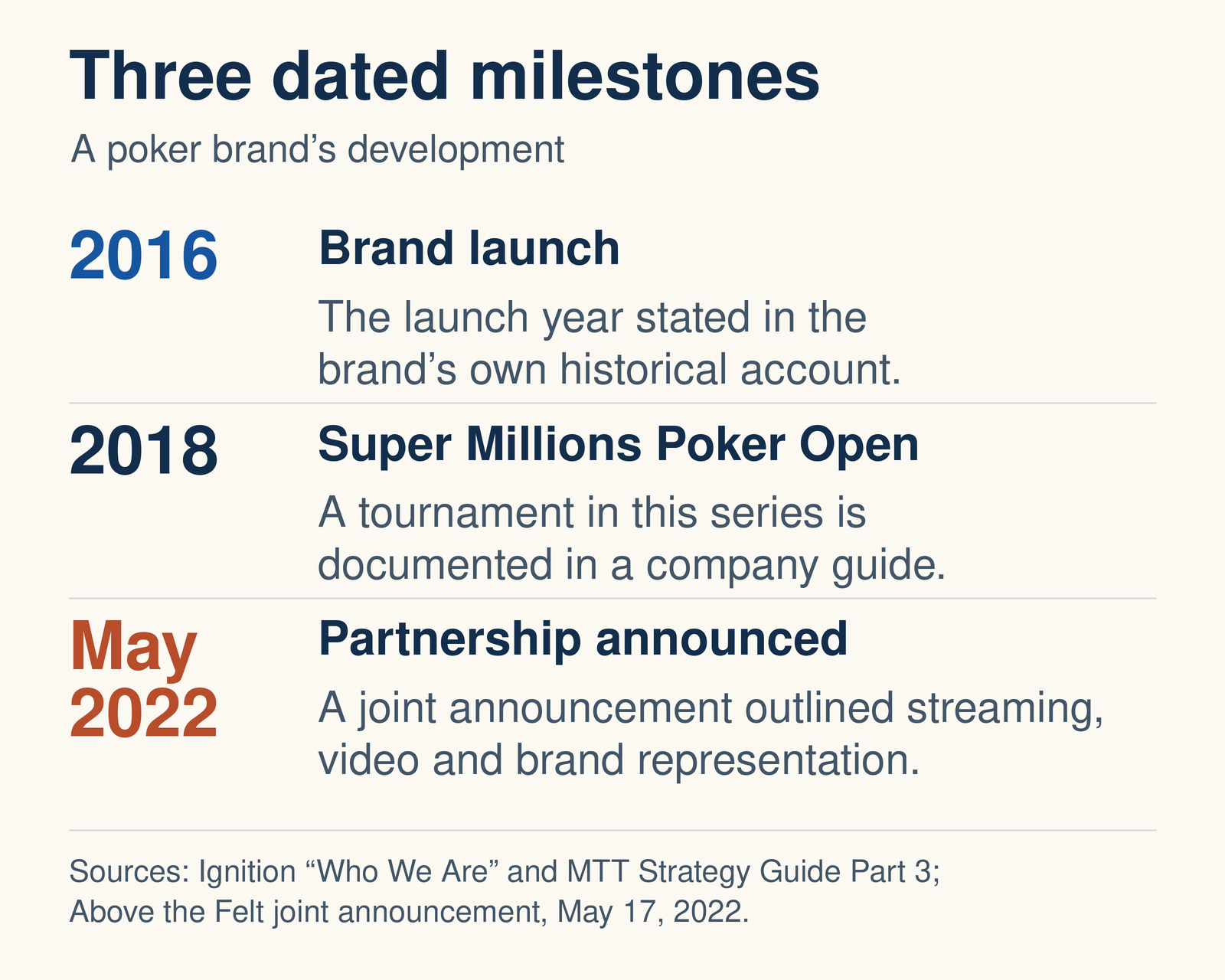
On May 17, 2022, the brand announced a partnership with poker player Landon Tice, working with marketing agency Above the Felt.
Tice’s announced ambassador role included streaming online poker events, participating in the company’s video content marketing, and representing the brand at live poker festivals.
The festival appearances were planned for North America, beginning that summer. The announcement’s stated aims concerned awareness of the poker offering and greater brand exposure. These were the purposes of the relationship, rather than reported measures of its commercial results.
The partnership placed a named public representative alongside the company’s existing program of poker events. Organizing a tournament and communicating a brand involve different responsibilities: one concerns the occasion for play, while the other concerns how the business is presented.
Tice’s announced duties joined those activities by connecting content about poker with representation at festivals.
The historical development was the establishment of that relationship in 2022. The planned work would present the same poker business through different media and at poker events beyond its own online room.
Expansion within a recurring festival
Another view of business development comes from the company’s undated guide to the eighth Golden Spade Poker Open. It describes a schedule of 166 tournaments, compared with 140 in the preceding edition.
Those figures record the growth of that festival’s event program, rather than a change in the company’s total customer numbers.
For that edition, the festival began on October 17 and ended on November 18. Its Main Event and Mini Main Event were scheduled for November 15. The program extended over more than a month, with those headline events positioned within the wider calendar.
The guide describes both Texas Hold’em and Omaha events, so the schedule encompassed more than one poker format.
The company’s expanded schedule included both formats, bringing tournaments together within the existing festival identity. Returning to the same series name did not require repeating an identical program.
This kind of expansion is useful for understanding how a poker room grows as a business. The offering can develop through the contents of a recurring festival, with more events to schedule, describe, and organize.
The calendar makes that product development visible without requiring assumptions about company revenue or market share.
The company’s present poker offering combines cash games and tournaments with desktop and browser access, supported by rules, guides, and customer assistance. These are parts of the business now, rather than evidence of when each feature was introduced.
The company’s account of its community forum also describes staff collecting comments on games and services for product review. It presents the forum as a place for product announcements, as well as discussion among players.
That adds another part of the development process: the company publishes information about its offering while receiving suggestions about what players would like to see changed or added to the existing service.
Its history is clearer through the specific developments: the stated 2016 launch, a documented tournament series in 2018, the content partnership announced in 2022, and expansion within an annual festival.
The business that emerges is a poker brand organizing events, publishing around them, and developing ways to present its offering to a wider audience.
