

No region on earth has had its fate decided more completely by the sea than the Caribbean. Five hundred years of commerce, conquest, and cargo have passed through those waters, and the shipping lanes that cross them today carry the same gravitational weight they always have. This is not just a story about boats. It is a story about how islands survive.
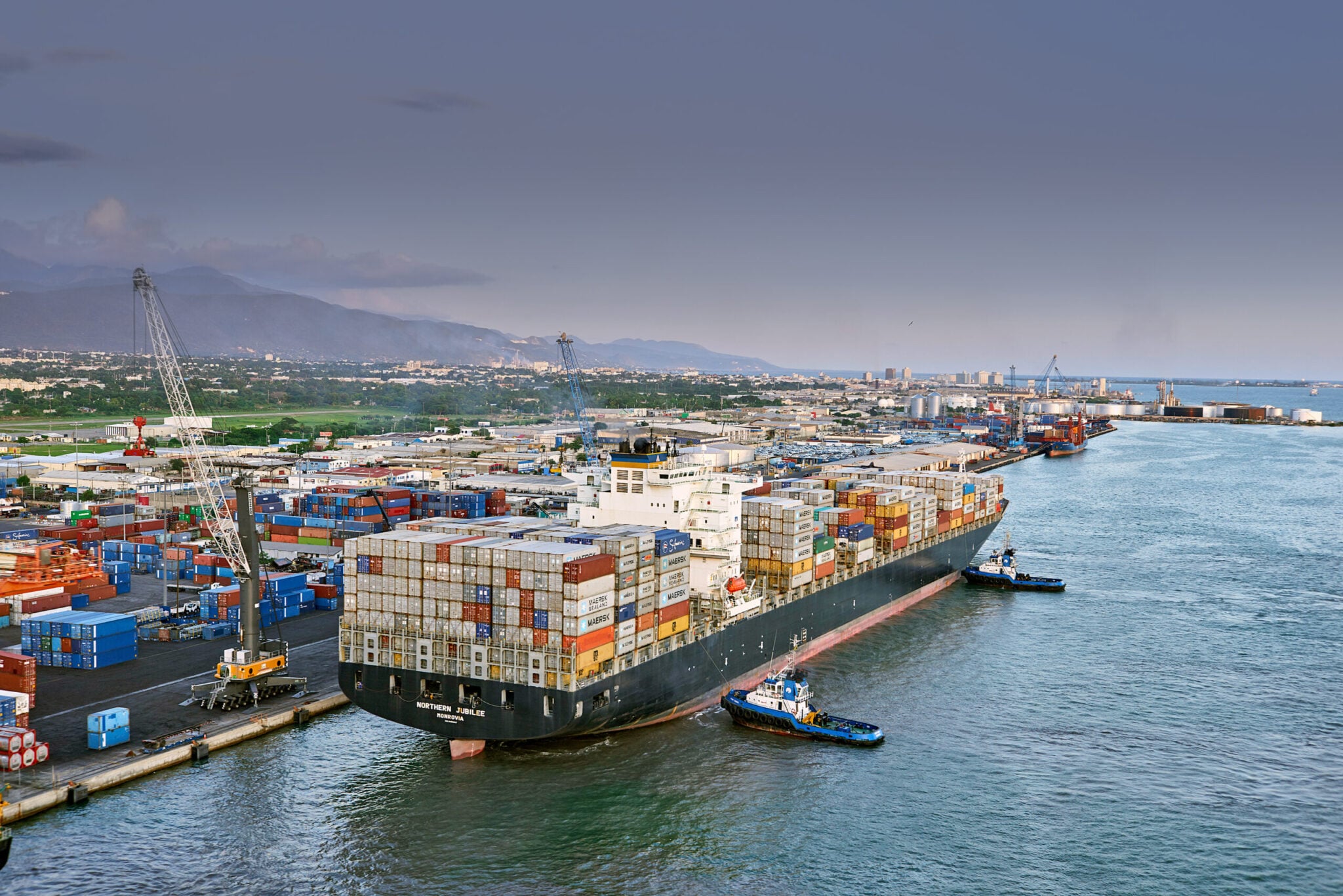
The Colonial Era: Sugar and Spanish Galleons
European powers understood the Caribbean’s maritime value almost immediately after contact. By the early 1500s, Spanish galleons were running the Carrera de Indias, a protected convoy system that moved gold, silver, hides, and sugar from the New World back to Seville. The routes were rigid by necessity: hurricanes, pirates, and shallow reefs made improvisation lethal.
Britain, France, and the Netherlands muscled in throughout the 17th century, each claiming islands and establishing their own trade corridors.
Sugar drove the whole machine. Plantations on Barbados, Jamaica, and Hispaniola produced commodity volumes that required dedicated fleets, purpose-built warehouses, and harbor infrastructure.
The Caribbean was, in effect, the first region in the Americas to develop a genuine maritime logistics industry, even if no one called it that at the time.
Colonial-era Caribbean ports like Kingston and Bridgetown were not sleepy fishing villages. They were bustling commercial hubs where merchant captains negotiated freight rates, insurance premiums, and sailing windows much the same way logistics managers do today. The paperwork changed. The core problem did not.
The Panama Canal Changes Everything
The 19th century brought steam-powered vessels, and with them a new kind of reliability. Sailing ships had always been dependent on the wind. Steamers ran schedules.
That shift mattered enormously to Caribbean trade, where predictability was the difference between a grocery store staying stocked and running empty.
The next major leap came with the opening of the Panama Canal in 1914, which connected the Atlantic and Pacific oceans through the Caribbean basin and substantially strengthened the region’s role in global trade.
Suddenly, all Atlantic-Pacific shipping via the Panama Canal passed through the Caribbean, according to Britannica’s economic overview of the Caribbean Sea. The islands were no longer peripheral waypoints. They sat at the center of the world’s most important maritime corridor.
That geography created a two-sided reality that still defines Caribbean commerce: enormous volumes of international cargo flowing through the region’s waters, but individual islands that remained stubbornly difficult to supply.
A container moving from Rotterdam to Los Angeles via Panama had no particular reason to stop at Dominica or St. Kitts. Inter-island supply was a separate problem, and for most of the early 20th century, it was a badly solved one.
Containerization and the Birth of Modern Island Logistics
Malcolm McLean’s 1956 experiment with standardized steel containers reshaped global shipping in ways that took a decade to fully register in the Caribbean.
His converted tanker, the Ideal X, carried 58 containers from Newark, New Jersey, in 1956 and helped launch a new era in maritime shipping.
Containerization changed the industry by making cargo easier to load, seal, stack, transfer, and track, while reducing handling costs and shortening time in port.
For the Caribbean, the implications were specific. Before containers, cargo arrived in burlap sacks, wooden crates, and loose nets.
Breakage and theft were routine. A Florida hardware store owner shipping hand tools to a construction crew in Grand Bahama in 1965 had no guarantee the shipment would arrive intact, on time, or at all.
The box changed that calculus completely. Sealed, standardized, and traceable, a container moving from a Miami warehouse to Nassau now traveled under conditions that were at least theoretically predictable.
That shift created an opening for specialized Caribbean carriers. Rather than fighting for space on global mega-vessels that had little incentive to stop at small island ports, a new category of regional operators emerged: companies running smaller container ships on fixed schedules between Florida and the islands, exactly the kind of reliable weekly rhythm that Caribbean businesses desperately needed.
“The Turks and Caicos Islands have no agriculture, no manufacturing. Everything must be imported. Tourism drives our economy, making reliable shipping essential for businesses here.”
This observation from a senior logistics executive in the Turks and Caicos, reported by Cargo Express Services, captures what industry operators have understood for decades: in the Caribbean, shipping is not a support function. It is the economy’s circulatory system.
The Island Supply Chain Paradox
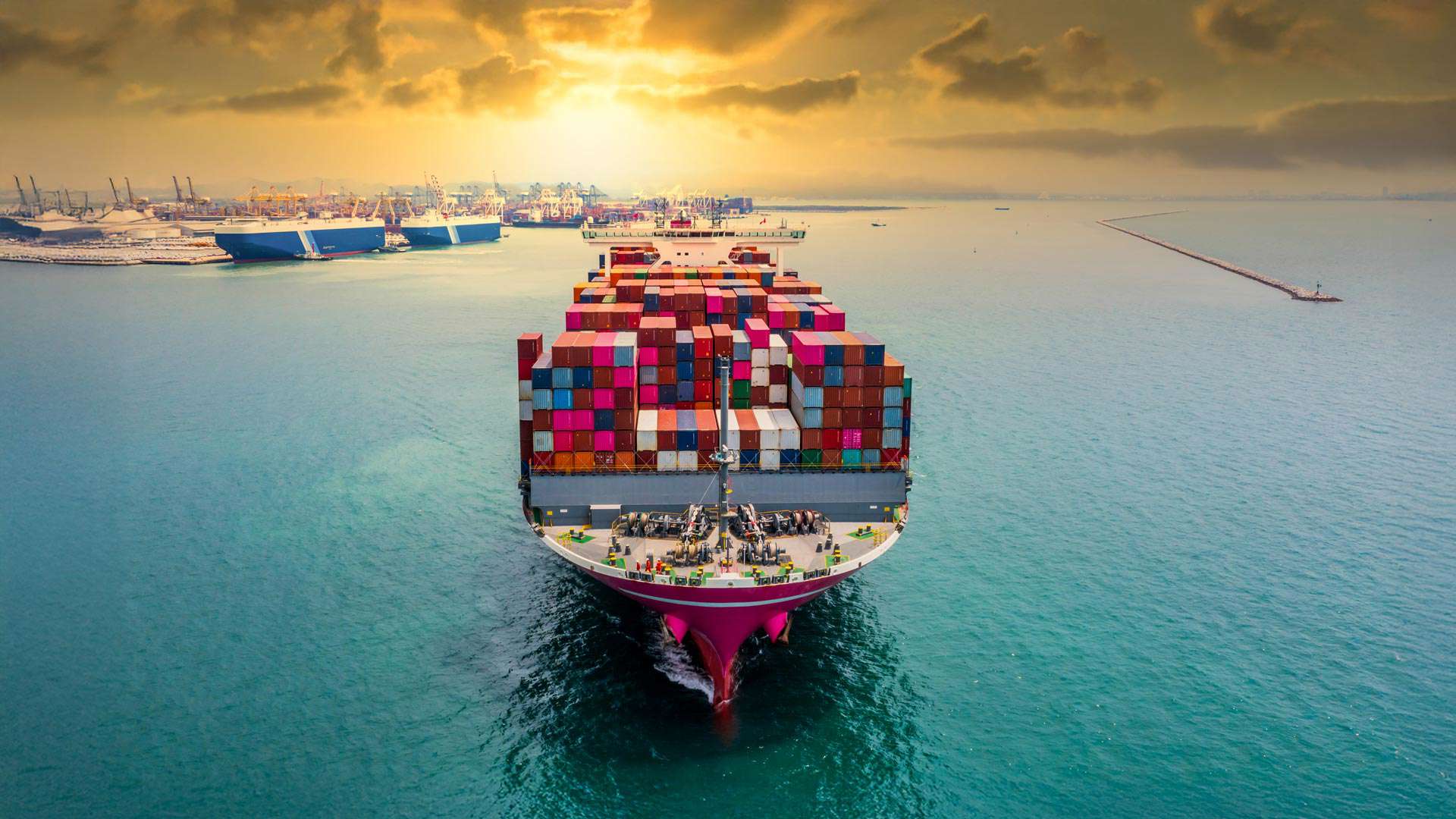
Here is a framework worth naming: the Island Supply Chain Paradox. Caribbean islands are simultaneously some of the easiest places to reach by sea and some of the hardest to supply reliably. The sea gives access but also imposes limits.
Shallow drafts, modest port infrastructure, small receiving populations, and hurricane vulnerability mean that a carrier serving St. Vincent faces operating challenges that a Rotterdam-to-Shanghai operator simply does not encounter.
The paradox explains why Caribbean shipping history keeps cycling through the same problem: adequate global transit capacity combined with persistent gaps in last-mile island delivery. Every era produces a version of this tension.
The colonial convoys solved it with brute force and monopoly. Steam lines solved it with schedules. Containerization solved it with standardization. The modern answer is frequency, specialized vessels, and digital cargo tracking.
Today’s Caribbean maritime network reflects decades of iteration on that core problem. A mapping project by the Association of Caribbean States identified 167 active services across 55 shipping companies, operating 614 ships, connecting 37 countries through 71 ports in the Greater Caribbean, with a combined capacity of 1,357,992 TEUs. That is a dense web of routes for a region most people associate with tourism rather than trade.
U.S.-Caribbean Trade and the Modern Freight Relationship
The commercial relationship between the United States and the Caribbean islands underpins most of the cargo volume on those routes.
U.S. goods exports to the Caribbean in 2025 totaled $31.7 billion, up 3.8 percent from 2024, according to the Office of the United States Trade Representative. That figure is carried almost entirely by ocean freight. No rail crosses the Florida Straits.
Air freight handles high-value, time-sensitive cargo. But groceries, building materials, appliances, vehicles, and everything else a Caribbean household or business depends on moves by ship.
For individuals and smaller businesses, this is where shipping packages to the Caribbean becomes a very practical matter, not an abstract logistics concept.
Fixed-schedule carriers connecting South Florida to the Bahamas and the wider Caribbean exist precisely because the demand never goes away. An island that imports most of what it consumes cannot wait two weeks for the next available vessel.
| Era | Primary Cargo | Key Technology | Main Challenge |
|---|---|---|---|
| 1500s to 1700s | Sugar, silver, hides | Sail-powered galleons | Pirates, weather, reef navigation |
| 1800s to early 1900s | Sugar, rum, manufactured goods | Steam-powered vessels | Irregular schedules, breakage |
| 1950s to 1980s | Consumer goods, building materials | Steel containers | Port capacity, theft, last-mile delivery |
| 1990s to present | Full retail supply chains | Digital tracking, refrigerated containers | Hurricane disruption, draft limits |
What Has Not Changed in Five Centuries?
Zoom out far enough, and the pattern is almost stubborn in its consistency. The Caribbean depends on ships. Ships depend on reliable routes. Routes depend on enough commercial volume to justify the risk. The colonial sugar economy created that volume. Modern tourism and consumer demand sustain it.
The carriers operating those routes today carry a different type of cargo than the Spanish galleons did, but they face versions of the same questions: Which ports can handle the draft? How do you maintain a schedule through hurricane season?
What happens to cargo when a storm shuts a port for a week? The technology for answering those questions has improved dramatically. The questions themselves have not.
That continuity is what makes Caribbean shipping history worth understanding. It is not a museum exhibit. The decisions made by 16th-century Castilian merchants about which ports to favor and which routes to protect shaped infrastructure that in some cases still exists.
The modern carrier choosing between a direct call and a transshipment hub is reasoning through a version of the same problem. Geography does not change. The sea does not move.
So the next time a container ship clears the Port of Palm Beach and heads south toward Nassau or Bridgetown, consider what it carries: the accumulated logic of five centuries of island commerce, running on a schedule, on time.
