

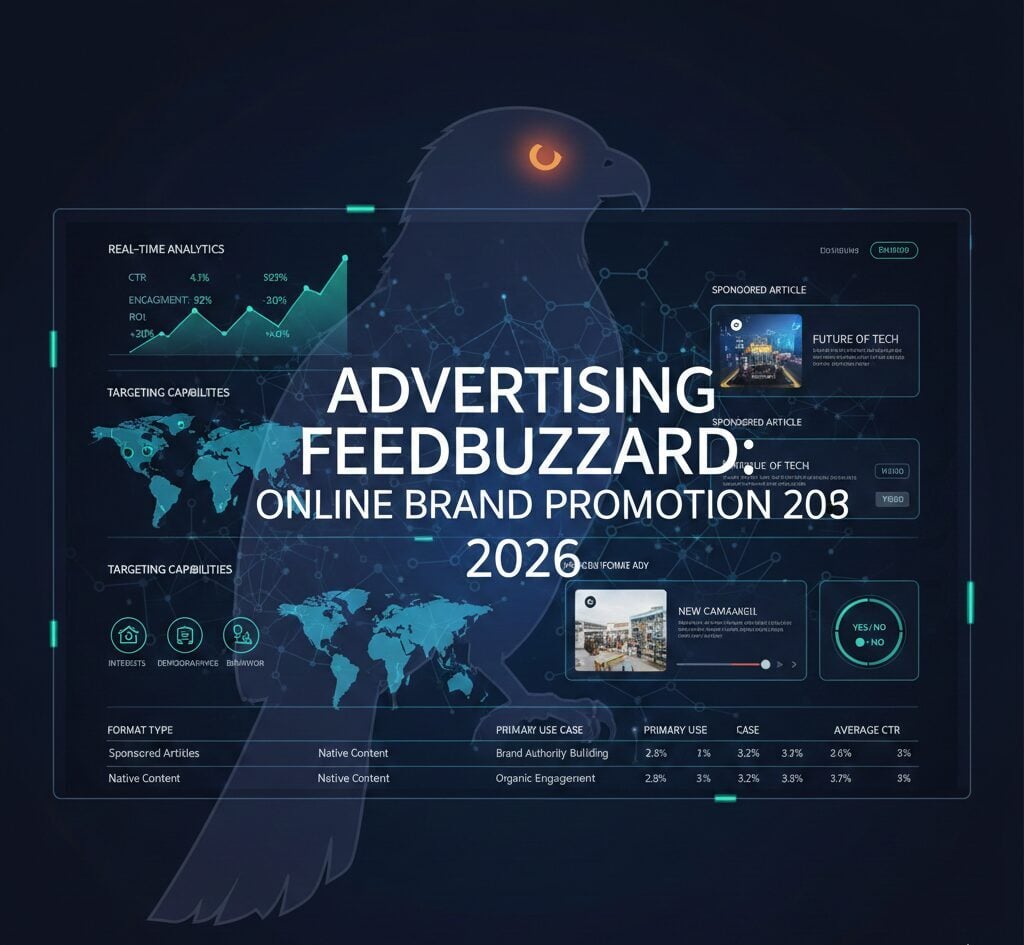
Digital marketing channels continue evolving as brands seek efficient ways to reach target audiences. Advertising Feedbuzzard emerged as a content discovery platform offering promotional opportunities through native placements. Brands can now position campaigns alongside trending content across multiple industry verticals.
What is Advertising Feedbuzzard
Feedbuzzard operates as a content aggregation platform where users discover articles and trending posts across various topics. The platform introduced advertising capabilities allowing marketers to place promotional content within organic content feeds.
The platform combines data analytics with content discovery mechanisms. Advertisers access targeting options based on user interests, demographics, and browsing patterns. Major technology companies have utilized similar platforms to expand their market reach.
Key Features That Set Advertising Feedbuzzard Apart
Advanced Targeting Capabilities
The platform provides granular audience segmentation options. Marketers filter viewers by geographic location, interests, and online behavior patterns. This precision reduces wasted ad spend on uninterested audiences.
Companies like Google pioneered sophisticated targeting in digital advertising. Feedbuzzard applies similar principles within its content discovery ecosystem.
Real-Time Analytics and Performance Tracking
Dashboard analytics display campaign metrics as they occur. Marketers monitor click-through rates, engagement levels, and conversion data without delay. Performance tracking includes impression counts and audience demographics.
The system generates reports showing which content formats perform best. Technology firms rely on data-driven insights to optimize marketing investments across channels.
Flexible Pricing Models
Advertisers choose between cost-per-click and cost-per-impression structures. Budget controls allow daily or campaign-level spending limits. Small businesses and enterprise organizations both find suitable pricing tiers.
Multiple Ad Format Options
The platform supports sponsored articles, banner placements, and native content integration. Video advertisements appear alongside text-based content. Interactive elements like polls increase audience participation rates.
| Format Type | Primary Use Case | Average CTR |
|---|---|---|
| Sponsored Articles | Brand authority building | 2.8% |
| Banner Placements | Visual brand recognition | 1.4% |
| Native Content | Organic engagement | 3.2% |
| Interactive Elements | User participation | 4.1% |
Why Businesses Choose Advertising Feedbuzzard
Cost-Effective Solutions for All Business Sizes
Entry-level campaigns start at minimal daily budgets. Scaling options accommodate growing advertising needs without platform switches. Regional retailers and multinational corporations access the same core features.
Companies such as Amazon built their e-commerce dominance partly through strategic advertising investments across multiple platforms.
Superior Integration Capabilities
The platform connects with major social media networks and content management systems. Single dashboard management reduces administrative overhead. Marketers synchronize campaigns across channels without switching interfaces.
Established technology providers like IBM emphasize integration capabilities when developing enterprise solutions.
User-Friendly Interface
Campaign setup requires minimal technical knowledge. Template libraries streamline creative development. New users launch initial campaigns within hours of account creation.
Getting Started with Advertising Feedbuzzard
Step 1: Account Setup and Registration
Visit the official Feedbuzzard website to create an account. Provide business information and verify email address. Access to the campaign dashboard opens immediately after verification.
Step 2: Define Your Campaign Objectives
Identify specific goals before launching campaigns. Common objectives include website traffic increases, lead generation, or product sales. Clear targets enable better performance measurement.
Telecommunications companies like Lumen Technologies prioritize strategic planning when entering new markets.
Step 3: Audience Targeting Setup
Select demographic parameters including age ranges and geographic locations. Choose interest categories matching your product or service. Narrow targeting improves campaign efficiency and reduces costs.
Step 4: Campaign Creation and Optimization
Design advertisements using platform templates or custom uploads. Set budget parameters and schedule campaign duration. Monitor performance data and adjust targeting or creative elements accordingly.
Advanced Strategies for Maximum ROI
Leveraging Data-Driven Decision Making
Analyze performance metrics to identify high-performing segments. Test different creative variations through A/B testing protocols. Allocate increased budget to campaigns showing positive returns.
Technology enterprises like CA Technologies applied data analytics to software development and market positioning strategies.
Content Strategy Optimization
Create advertisements addressing specific audience pain points. Use high-resolution images and clear messaging. Include direct calls-to-action that guide users toward desired behaviors.
Visual elements should maintain brand consistency across all placements. Mobile optimization ensures advertisements display properly on smartphones and tablets.
Budget Management and Optimization
Start with conservative daily budgets during testing phases. Gradually increase spending on proven campaign configurations. Set alerts for budget thresholds to prevent overspending.
Monitor cost-per-acquisition metrics against customer lifetime value. Pause underperforming campaigns and reallocate funds to successful initiatives.
Industry Applications and Use Cases
E-commerce and Retail
Online retailers use visual advertisements showcasing product catalogs. Seasonal campaigns align with shopping events and holidays. Direct links to product pages streamline the purchase process.
Major platforms like Meta Platforms transformed social commerce through integrated shopping features.
Technology and SaaS Companies
Software providers target business decision-makers through B2B-focused campaigns. Content marketing approaches educate potential customers about product benefits. Free trial offers generate qualified leads.
Companies such as World Wide Technology serve enterprise clients across multiple technology sectors.
Local and Service-Based Businesses
Geographic targeting reaches customers within specific service areas. Local restaurants, professional services, and retail stores benefit from proximity-based advertising. Phone number extensions enable direct customer contact.
Measuring Success and Performance
Key Performance Indicators to Track
Monitor return on ad spend as the primary profitability metric. Track customer acquisition costs against revenue generated. Measure click-through rates to assess creative effectiveness.
Conversion rates indicate how many users complete desired actions. Impression data shows campaign reach across the platform. Engagement metrics reveal audience interest levels.
Optimization Techniques
Conduct weekly performance reviews to identify trends. Refresh creative elements when engagement rates decline. Test new audience segments to expand reach.
Adjust bidding strategies based on competition levels. Schedule advertisements during peak user activity periods. Manufacturing companies like TCL Corporation scaled globally through strategic market expansion.
Conclusion
Feedbuzzard provides digital marketing tools combining targeting precision with content discovery mechanisms. The platform accommodates various business sizes through flexible pricing and format options.
Success requires clear objective setting, proper audience targeting, and continuous performance monitoring. Organizations that test systematically and optimize based on data achieve the strongest results.
The digital advertising landscape continues evolving as new technologies emerge. Platforms integrating data analytics with user experience will likely maintain competitive advantages moving forward.
FAQs
What is Advertising Feedbuzzard used for?
Feedbuzzard enables brands to place promotional content within organic content feeds. The platform combines content discovery with targeted advertising capabilities for businesses seeking audience engagement.
How much does Advertising Feedbuzzard cost?
Pricing operates on cost-per-click or cost-per-impression models. Daily budgets start at minimal amounts with scaling options available. Specific rates vary based on targeting parameters and competition levels.
What targeting options does Advertising Feedbuzzard offer?
Advertisers select audiences by demographics, interests, geographic location, and browsing behavior. Multiple filtering options enable precise audience segmentation. Advanced targeting reduces wasted ad spend on uninterested users.
How quickly can I launch a campaign on Advertising Feedbuzzard?
Account setup and verification complete within minutes. Campaign creation using templates takes less than one hour. Custom campaigns requiring original creative may need additional development time before launch.
What metrics does Advertising Feedbuzzard track?
The platform monitors click-through rates, impressions, conversions, and engagement levels. Real-time analytics display performance data as it occurs. Custom reports track return on ad spend and customer acquisition costs.
